

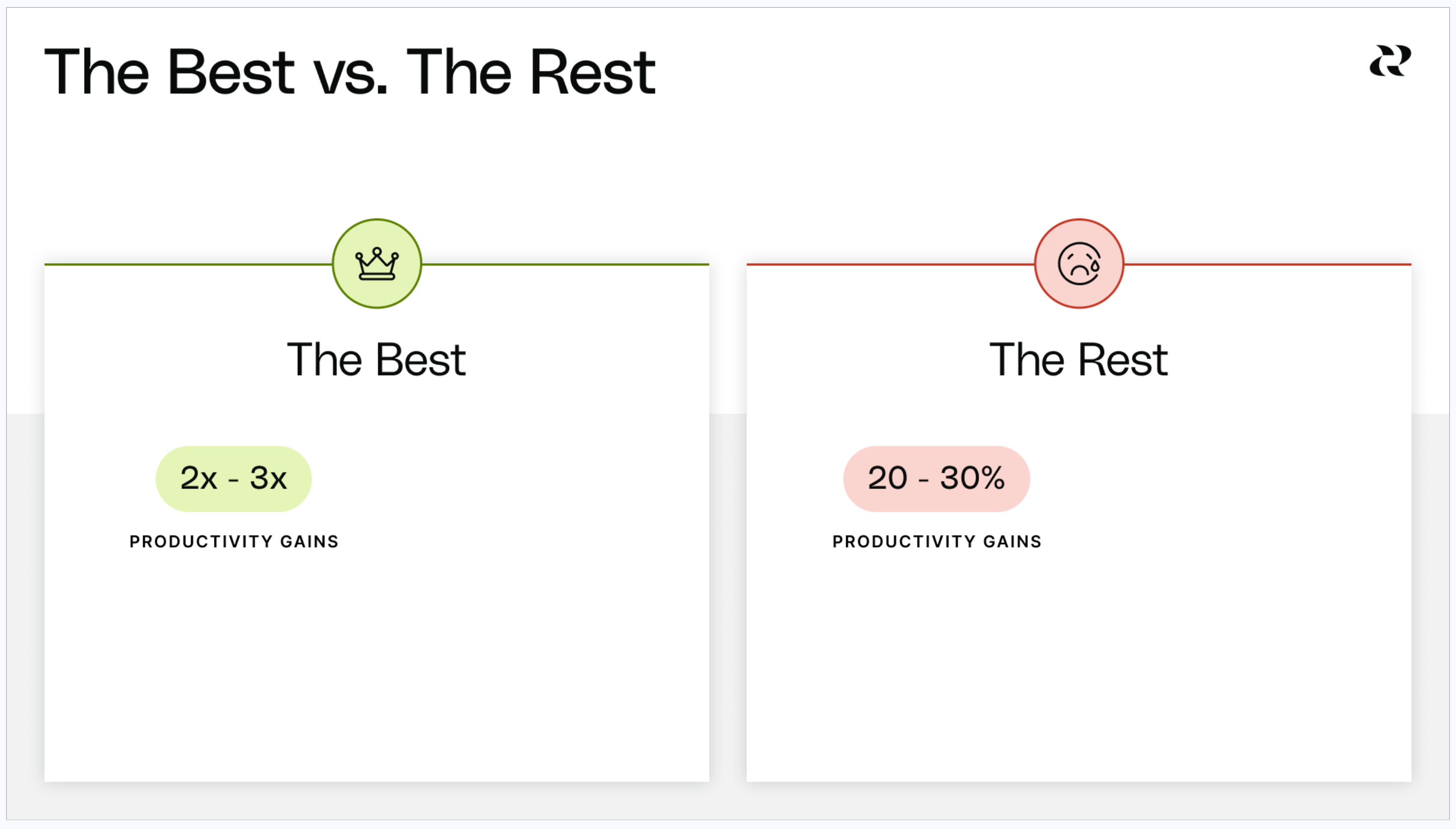
Here’s the paradox I’m seeing in product teams right now: while nearly everyone is increasing their AI usage, the gap between the productivity gains of the very best teams and everyone else is actually widening. While the average team adopting AI is seeing a 20 - 30% increase in productivity, the very best teams are enjoying a 2x to 3x increase in pace!
Over the last year I’ve been studying the AI transformation leaders behind those elite teams to understand exactly what they’re doing differently. What I’ve found is that their results aren’t a function of better models or bigger budgets. They come from a specific set of tactics that are now starting to coalesce into an emerging playbook for AI transformation.
This article is a preview of my all new AI Transformation course, starting Oct 28th. The course is designed to give you the most actionable playbook for transforming your product team into an AI native organization. I’ll also be bringing in AI transformation leaders at the frontier as guest speakers each week so you can directly learn from their expertise. Learn more.
The Best Versus the Rest
The clearest way to see the gap is to look at what the best teams have actually achieved.
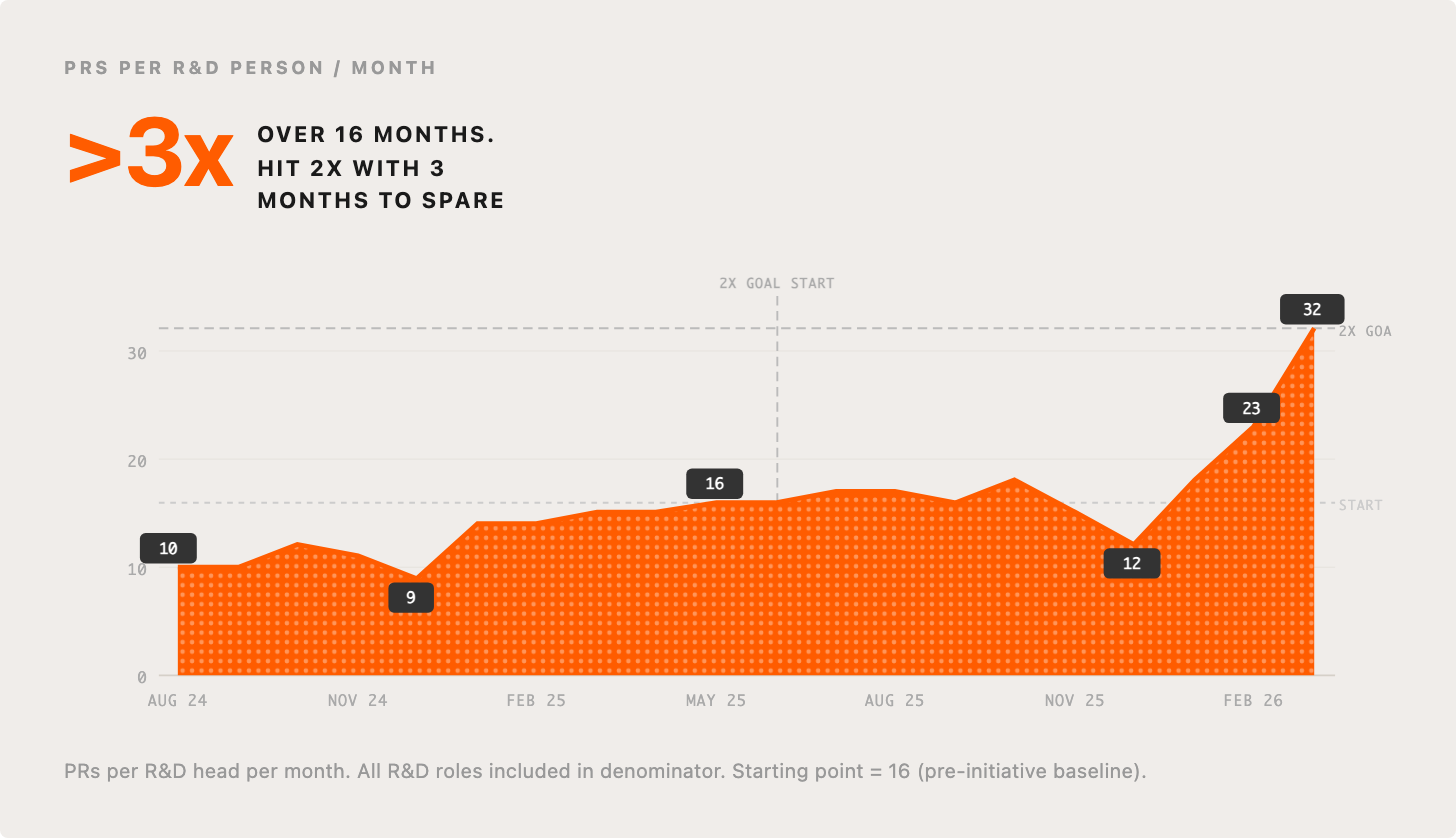
Take Fin, the customer agent platform recently acquired by Salesforce for $3.6 billion. Before the acquisition, they invested heavily in transforming into a truly AI native organization, upskilling their entire product and engineering team to an agentic way of working. Over 16 months, monthly merged PRs per R&D person more than tripled, going from roughly 10 to 32.
Of course, you could argue that more merged PRs doesn’t necessarily translate into business outcomes. It’s a fair critique. But Fin ultimately saw a significant increase in product launches alongside a meaningful decrease in the bug debt they had historically been carrying. The acceleration was real.
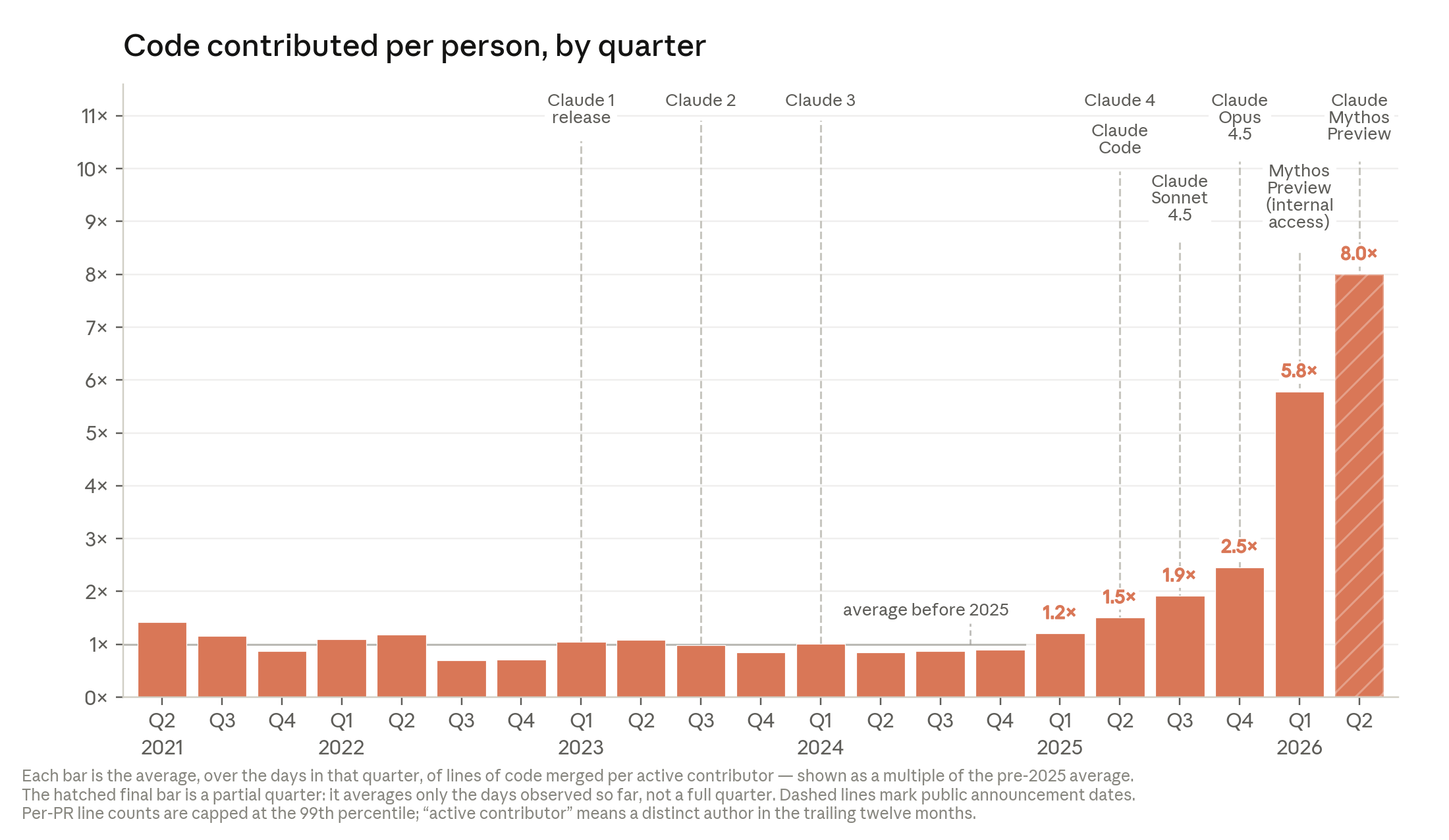
And Fin isn’t unique. Anthropic saw a 2.5x increase in code contributed per person per quarter compared to their pre-agentic coding days, and that curve is only steepening as newer internal models roll out across their engineering teams.
The gap shows up in breadth of adoption too. While the average team has AI pioneers in small pockets of the organization, Zapier and Ramp have driven 97% and 100% AI adoption respectively across every department. And this isn’t shallow usage.
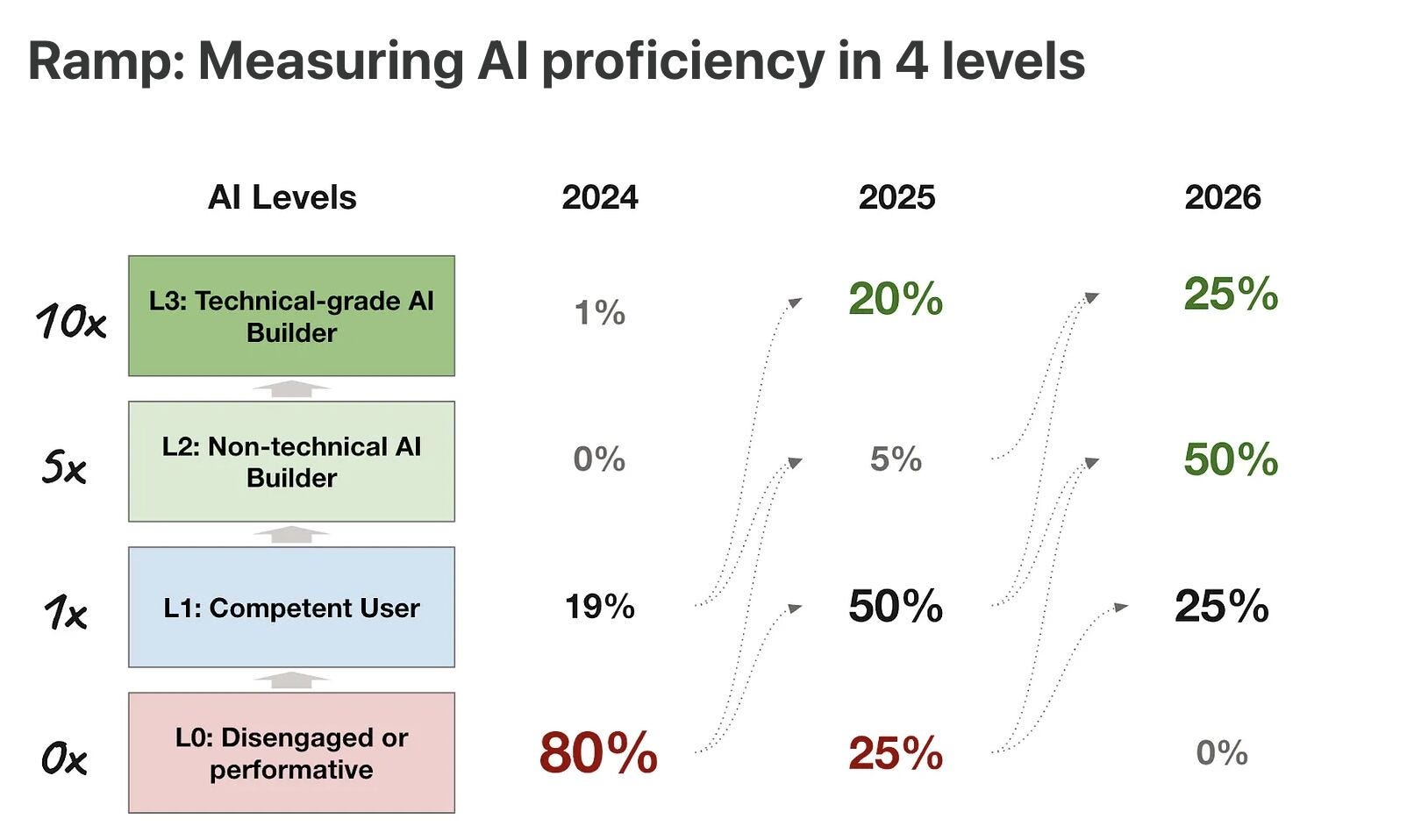
Ramp measures AI proficiency across four levels, from disengaged to technical grade AI builder. In 2024, 80% of the company sat at the bottom level and just 1% at the top. By 2026, nobody remained disengaged, half the company had become non-technical AI builders, and a quarter were operating as technical-grade AI builders.
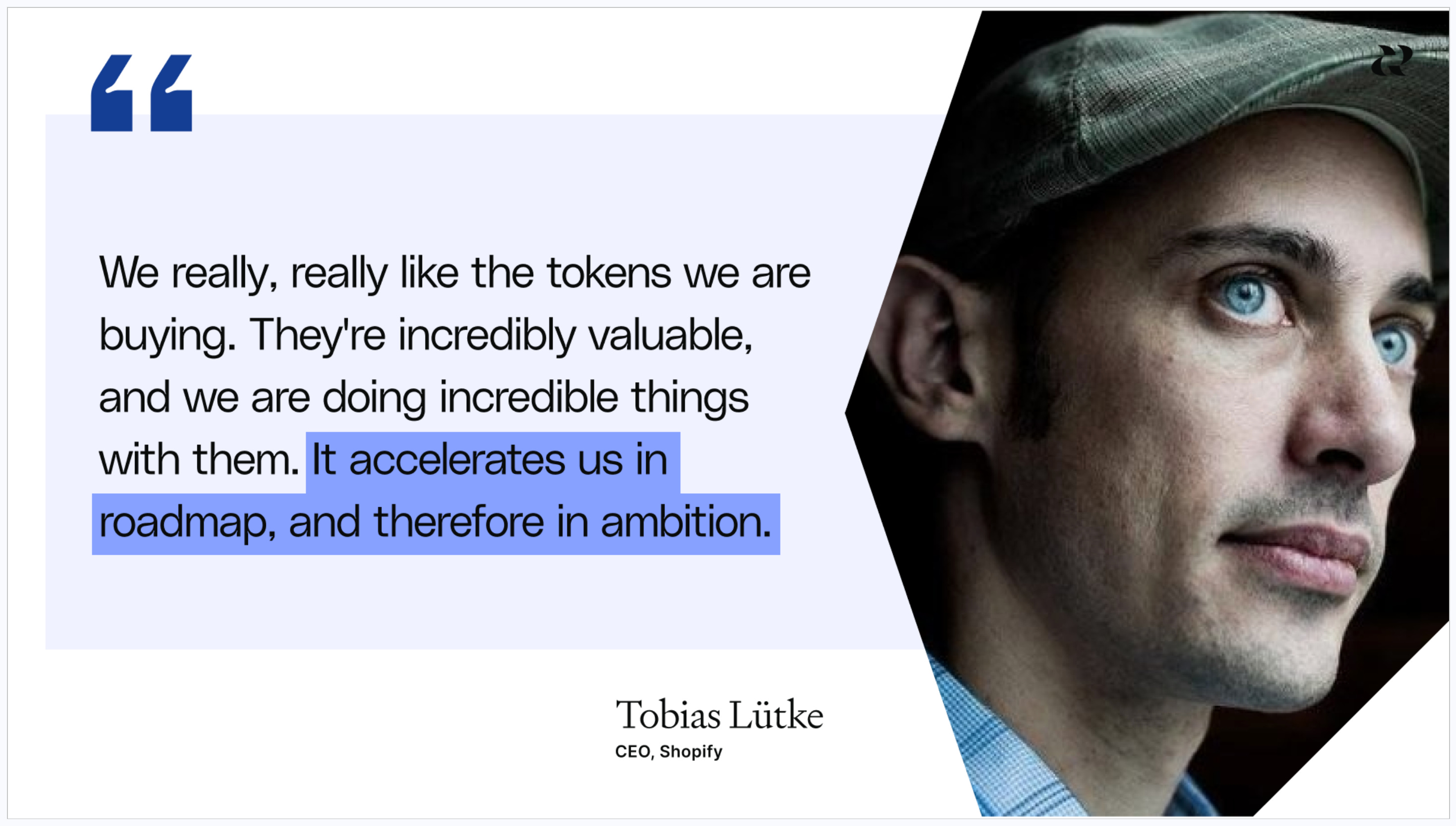
Finally, the gap shows up in how teams think about spend. While the average team is questioning the ROI on their token spend, the best teams are leaning in and spending aggressively. Shopify is rumored to have already blown through over a trillion tokens, and Tobi Lütke has been unapologetic about it:
“We really, really like the tokens we are buying. They’re incredibly valuable, and we are doing incredible things with them. It accelerates us in roadmap, and therefore in ambition.”
That last line is the one I keep coming back to. The best teams aren’t just using AI to do the same work faster. They’re using it to raise what they believe is possible.
Learning from AI Transformation Leaders
So why do the best teams benefit so much more? Thankfully, the leaders at these organizations have started answering that question by sharing the specific tactics behind their results.
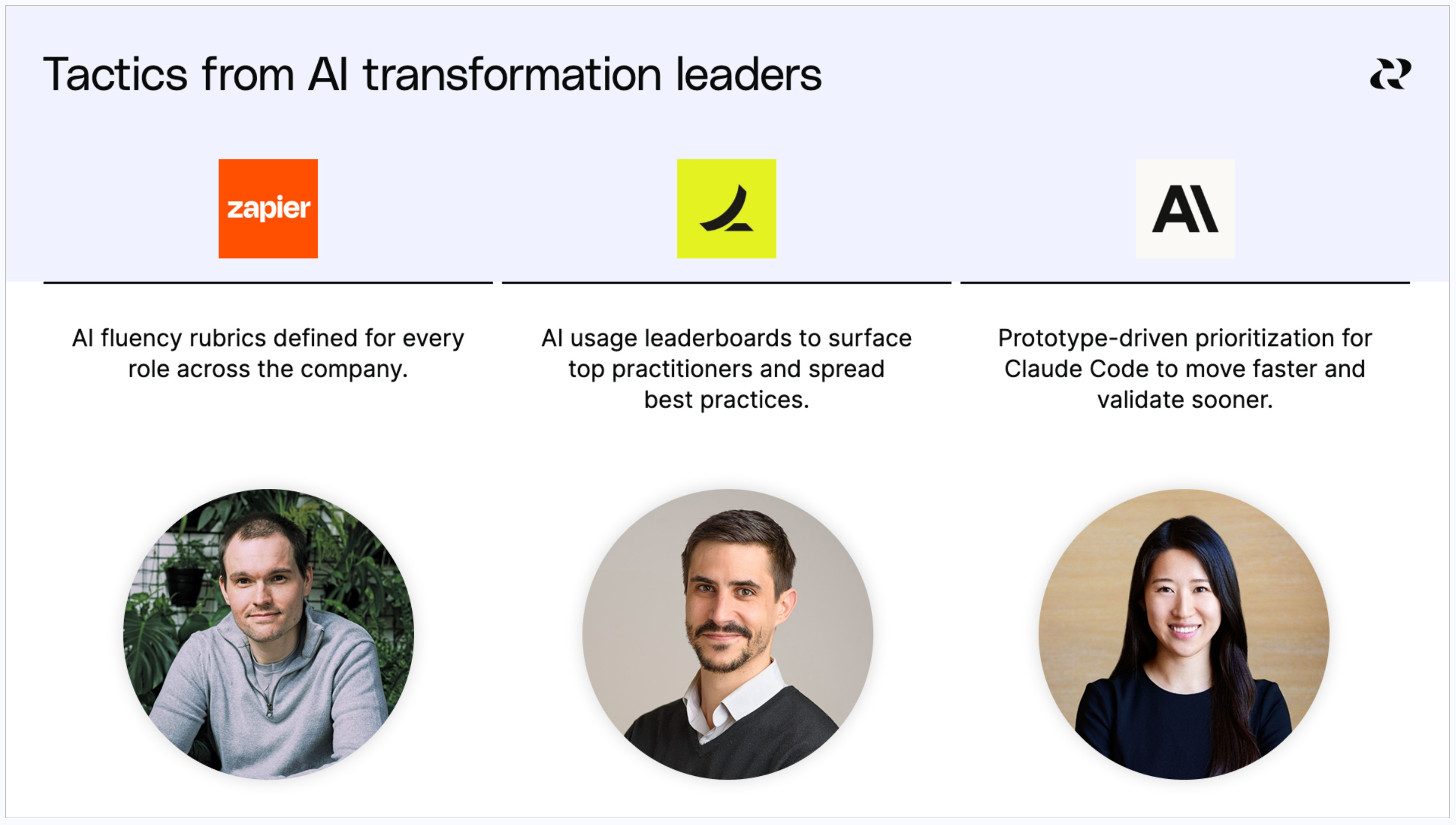
Wade Foster, CEO of Zapier, has shared the AI fluency rubrics his team developed to grade AI fluency for every role across the company, raising the overall floor of fluency within the organization. Geoff Charles, CPO at Ramp, has shared exactly how they built an AI usage leaderboard to surface top practitioners and create a flywheel of internal adoption. And Cat Wu, head of product for Claude Code at Anthropic, has shared how her team completely transformed their product operating model around prototype driven prioritization, letting them move faster and validate sooner.
These are just a few of the product leaders contributing to the emerging playbook. I’ve spent the last year studying each of them in depth, and I’ve codified what I learned into what I call the AI Transformation Playbook: an actionable guide to turning your own team into a truly AI native product team.
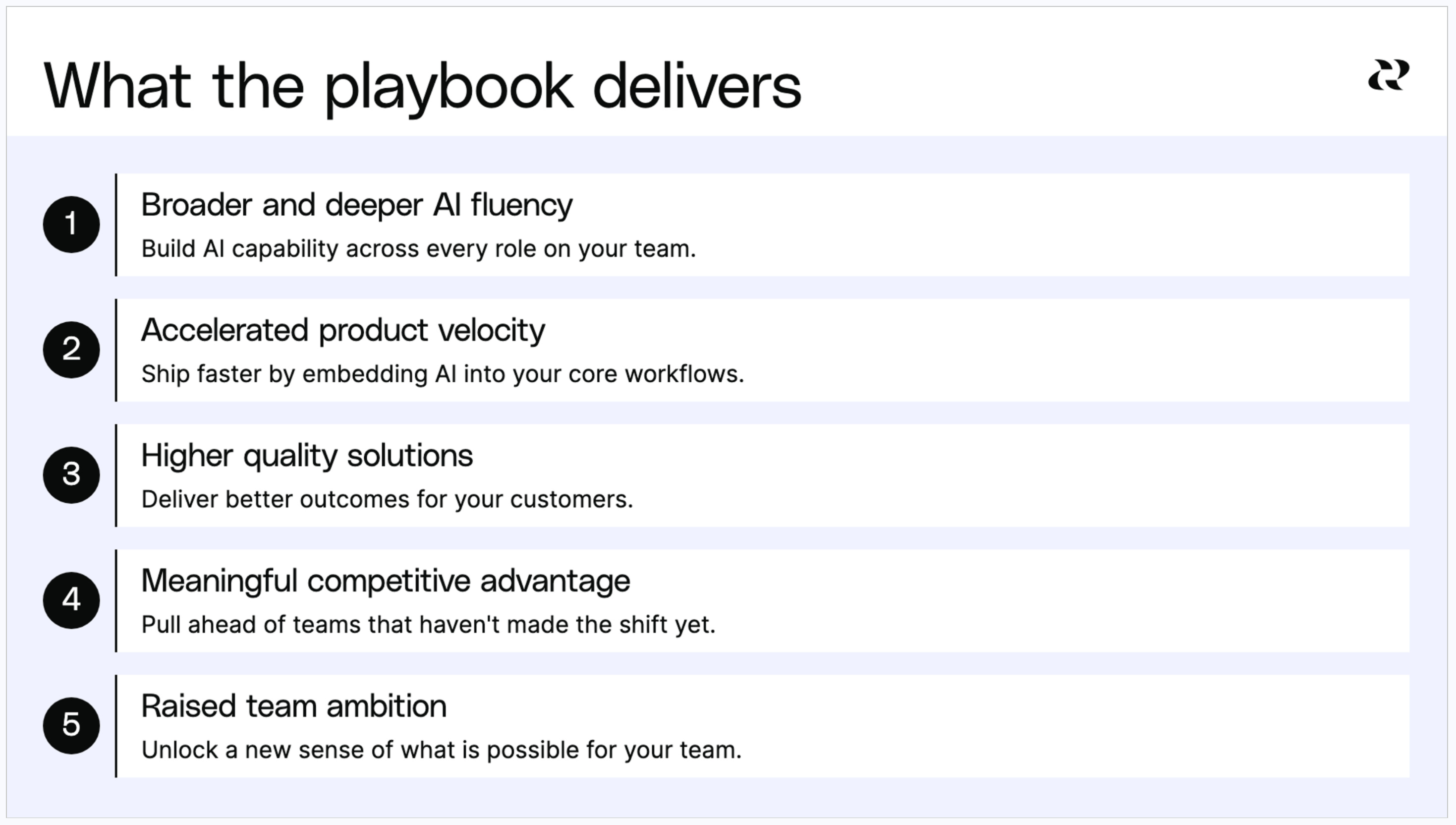
What I find most compelling is that the payoff goes well beyond speed. Yes, your team’s velocity accelerates, letting you ship your roadmap faster and crush your bug debt. But you’ll also explore far more design variations, collect far more customer insights, and answer far more data questions than ever before, which leads to higher quality solutions for your customers. That compounds into a meaningful competitive advantage over teams that haven’t made the shift yet. And most importantly, it raises your team’s ambition, letting you take on customer problems you wouldn’t have even contemplated before.
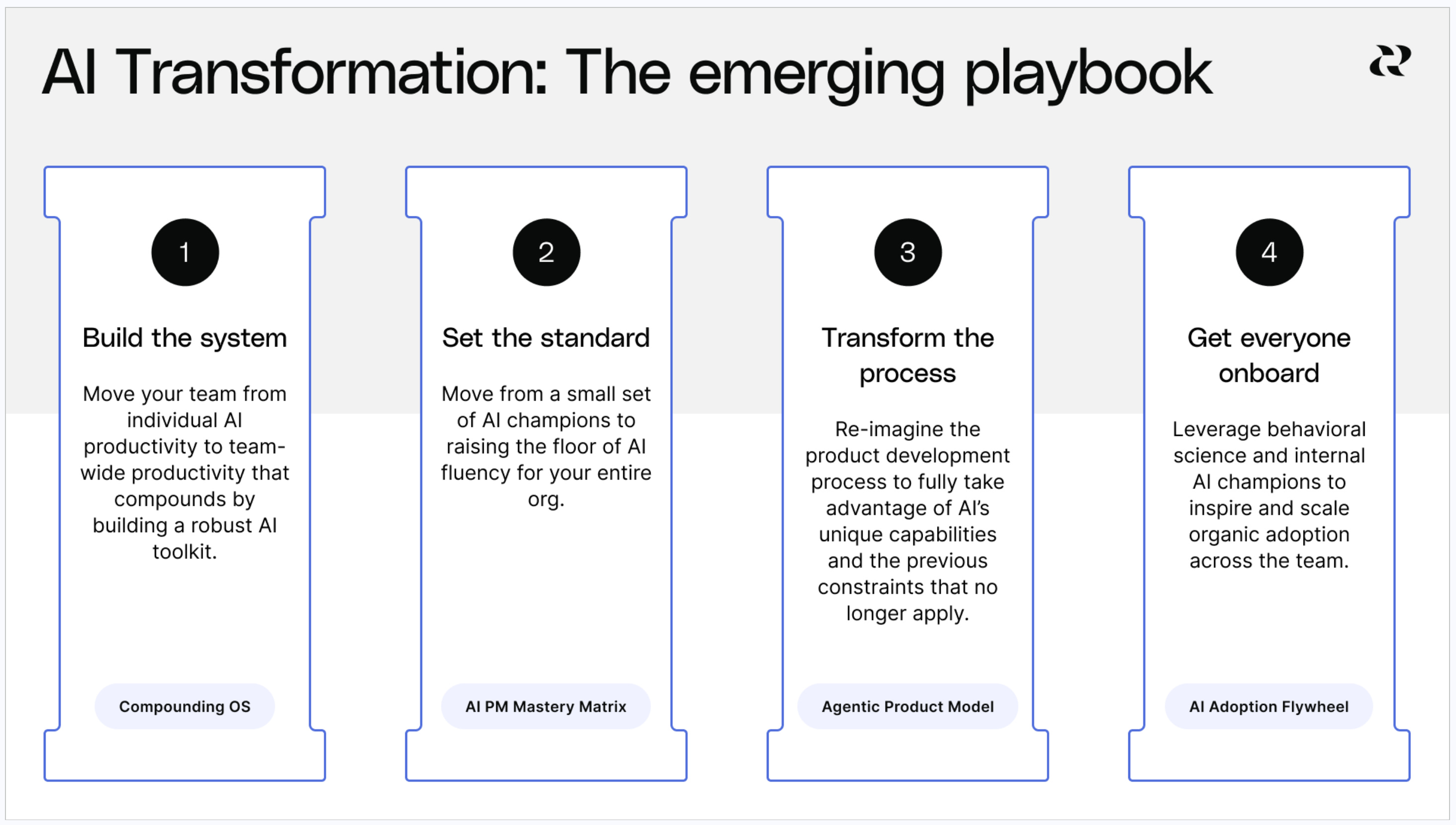
The AI Transformation playbook breaks down into four critical steps: build the system, set the standard, transform the process, and get everyone on board. Let’s walk through each of these steps in turn.
1. Build the System
It turns out that simply provisioning off the shelf AI tools to your team is insufficient for meaningful AI transformation. Instead, you need to invest in what I call a Compounding OS: a shared team AI operating system that raises the effectiveness of every AI user in the organization and gets smarter with every single use.
The distinction that matters here is solo wins versus compounding wins. On the average team, every use of AI starts from scratch. Each prompt is isolated, with no memory, no shared context, and no cumulative advantage. On the best teams, everyone builds on the work anyone else on the team has already done for that task. Every use makes the system smarter for everyone.
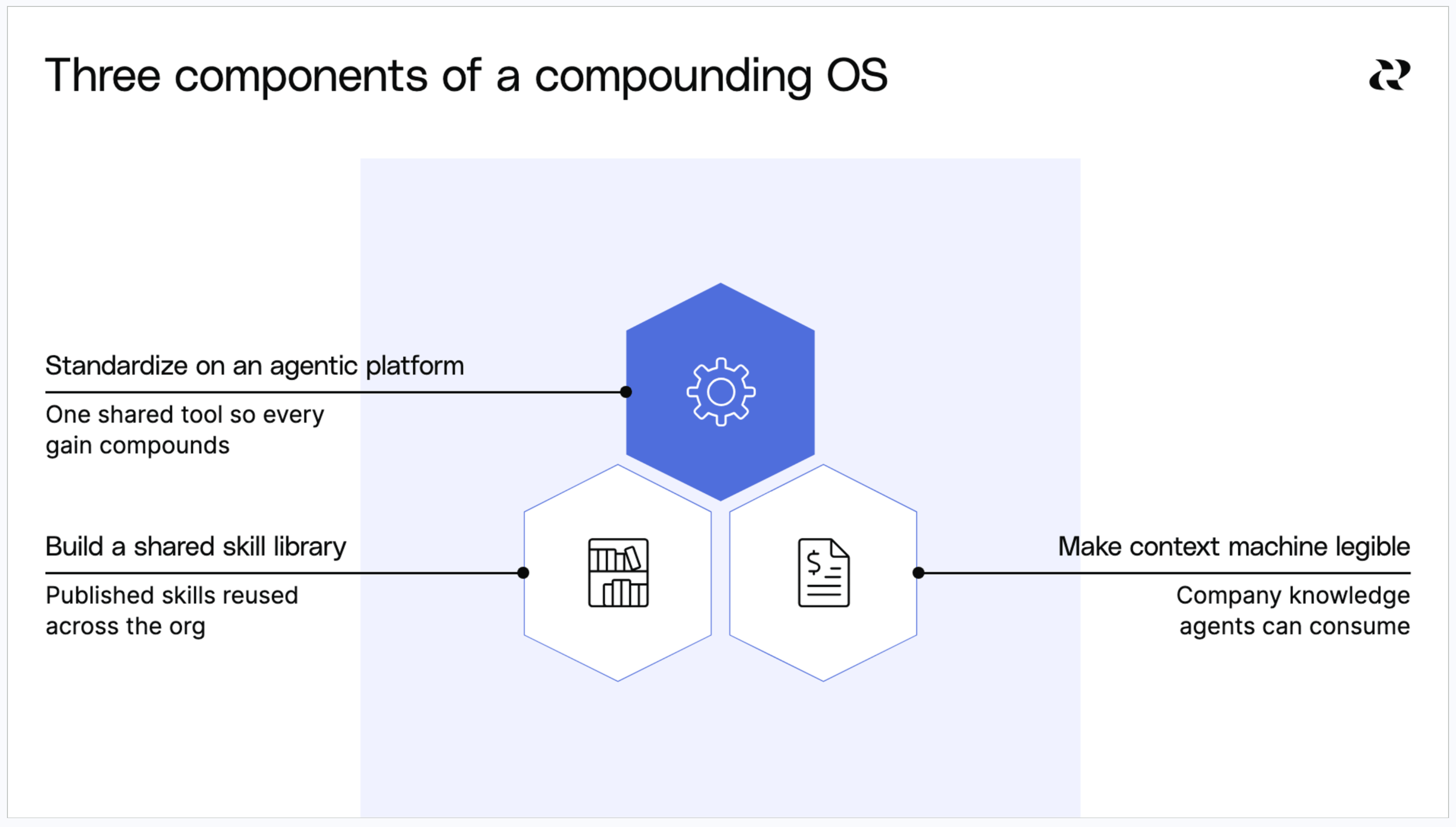
Building a Compounding OS comes down to three components:
Standardize on an agentic platform so that every gain compounds within one shared tool. Agentic platforms beat chatbots for this, and choosing and deploying the right one is the foundation everything else sits on.
Build a shared skill library of published skills that get reused across the organization, so the best way to run an NPS analysis or draft a launch plan only has to be figured out once.
Make company context machine legible so that agents can consume your company knowledge, design system, and data, and generate high quality output personalized to your business.
Once your Compounding OS is in place, you’ll enjoy team-wide compounding productivity wins with each team member’s use of AI.
2. Set the Standard
While the average team has a loose sense of what great AI usage looks like, the best teams have defined an explicit standard of performance for AI fluency. They do this by developing and publishing a detailed AI fluency rubric that spells out what great AI usage looks like at each level of proficiency. Then they put that rubric to work in two places: performance management, where it shapes reviews, and hiring, where it ensures new hires meet the new bar. The result is that fluency stops being concentrated in a small set of AI champions and the floor rises across the entire organization.
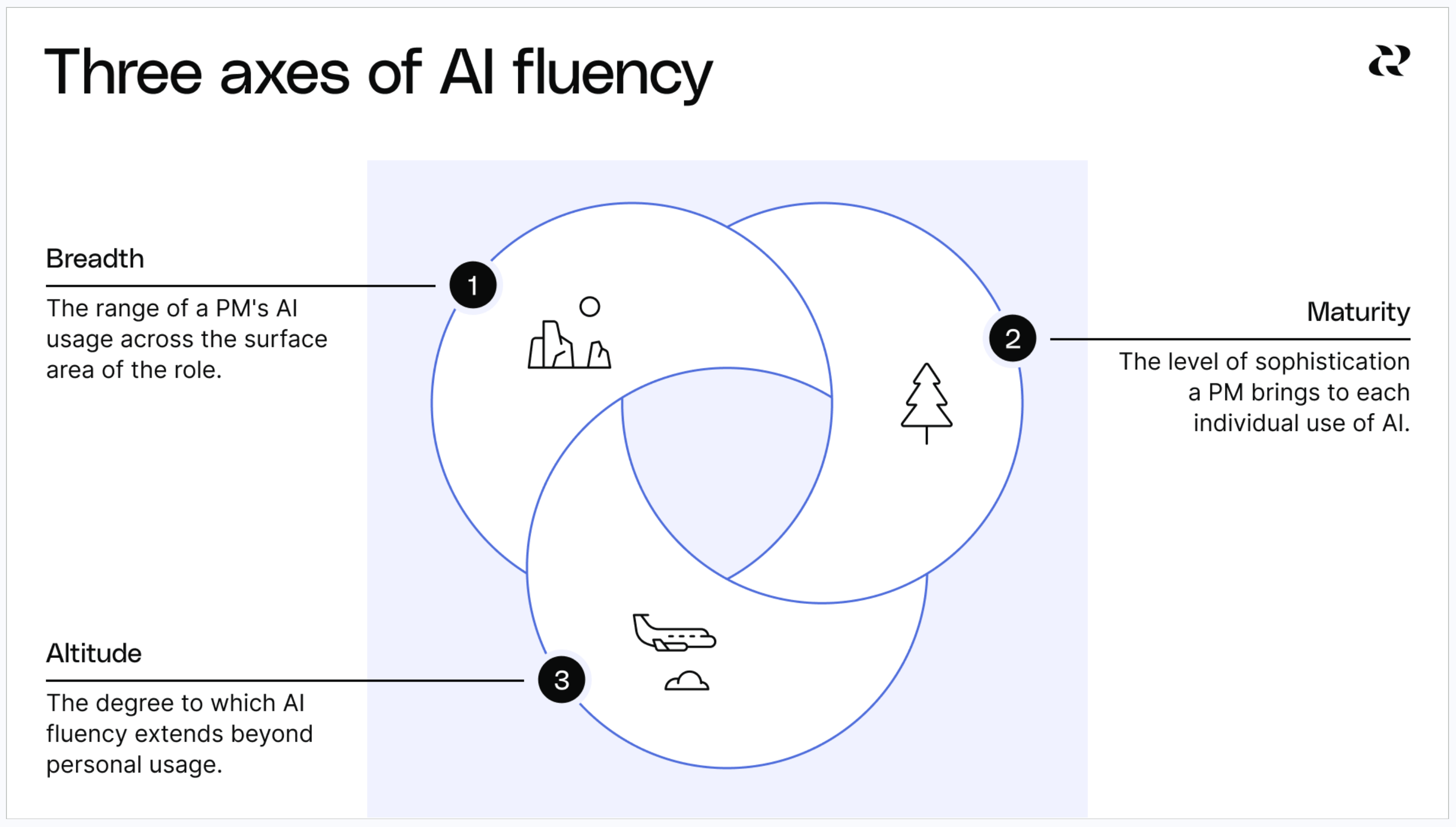
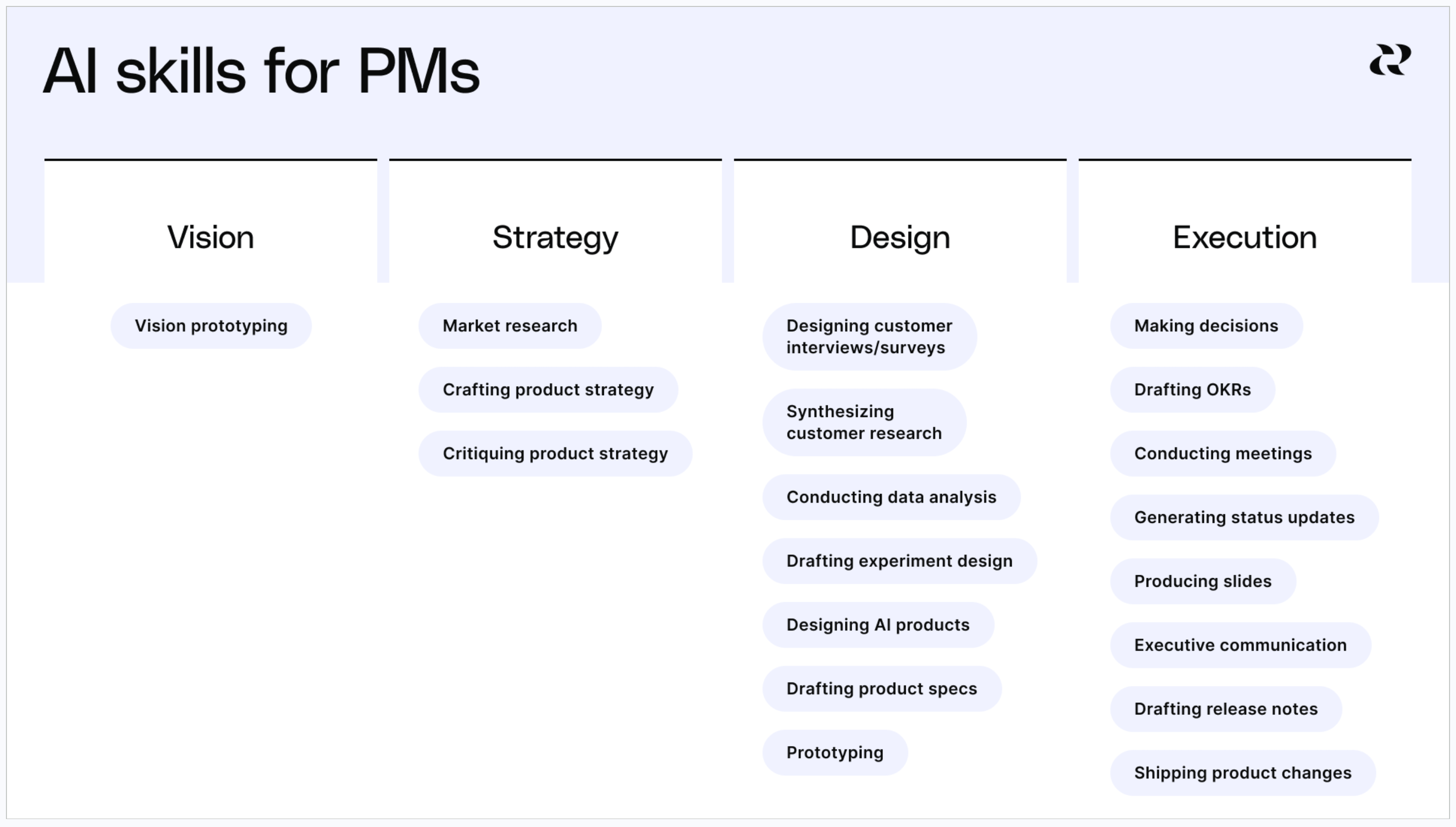
To help teams build their own rubric, I developed the AI PM Mastery Matrix by studying the leading AI fluency rubrics in the industry. It maps the AI skills product managers need across vision, strategy, design, and execution, from vision prototyping and market research to synthesizing customer research, conducting data analysis, and drafting product specs. It then evaluates fluency along three axes:
Breadth: the range of a product manager’s AI usage across the surface area of the role.
Maturity: the level of sophistication a product manager brings to each individual use of AI.
Altitude: the degree to which their AI fluency extends beyond personal usage to benefit the broader team.
The goal isn’t to adopt someone else’s rubric wholesale. It’s to calibrate a custom rubric to where your own team is on its transformation journey, and then raise it as the team matures.
Deploying such an AI fluency rubric across your team dramatically raises the floor of AI fluency across the entire team.
3. Transform the Process
While the average team is applying AI to the traditional product operating model, the best teams recognize that AI has fundamentally changed the assumptions that process was built on. So they’re taking the opportunity to reinvent it from first principles. I call the result the Agentic Product Model: a product operating model built from the ground up for the AI era.
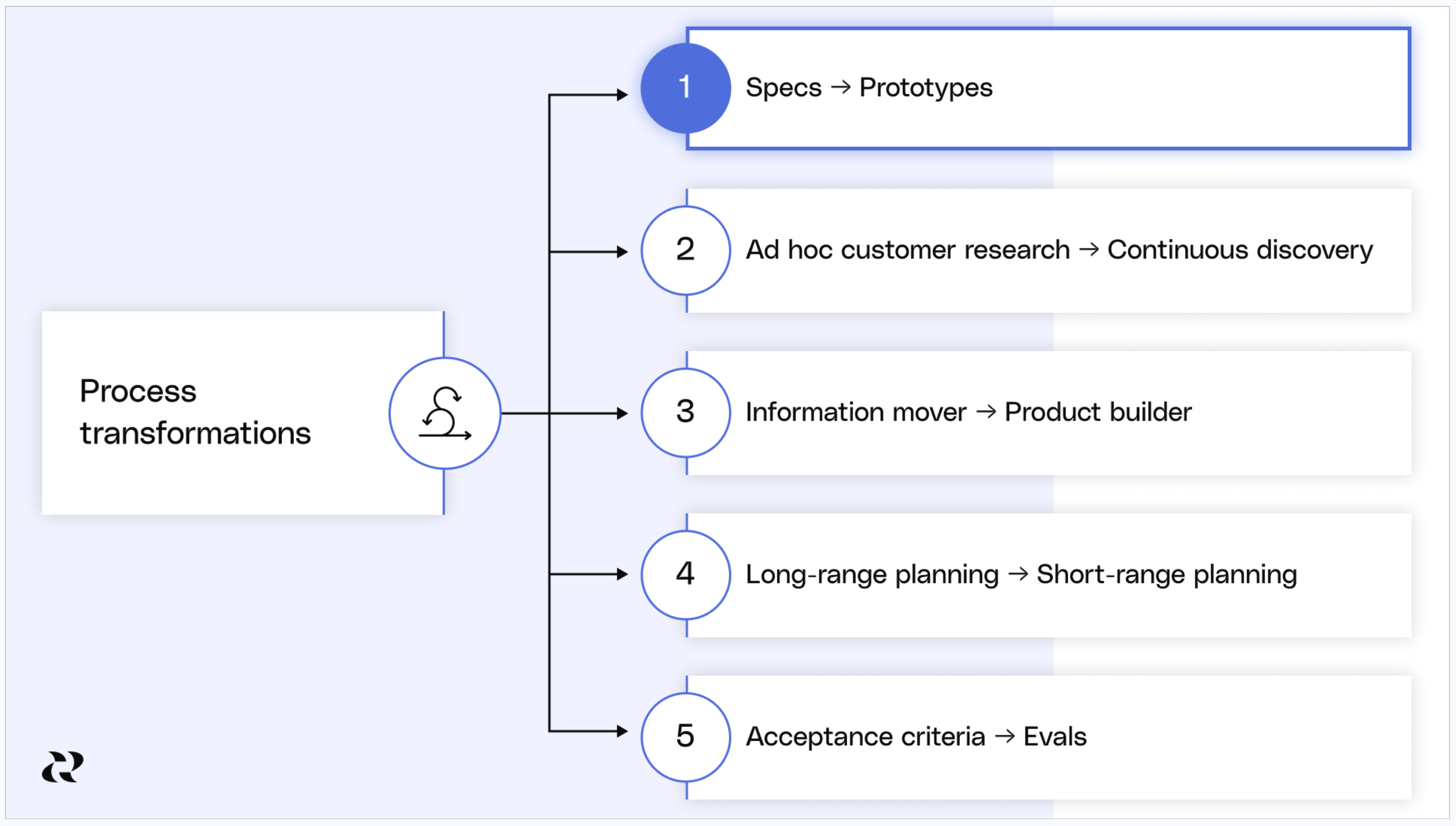
I’m seeing five process transformations at the heart of it:
Specs to prototypes. AI prototypes are replacing product specs and static mockups as the primary way teams communicate requirements and designs. They offer higher fidelity, let you explore far more design directions, and enable far more effective customer validation.
Ad hoc customer research to continuous discovery. Customer research is moving from something done occasionally to a continuous process, powered by the AI customer discovery techniques now available.
Information mover to product builder. AI is taking over much of the information moving and project management work product managers have traditionally owned, freeing them to return to the core craft of building.
Long range planning to short range planning. Planning horizons are shrinking, both because velocity has increased and because forecasting what the technology will soon make possible has become far more difficult.
Acceptance criteria to evals. As more software becomes non deterministic, traditional acceptance criteria are giving way to evals.
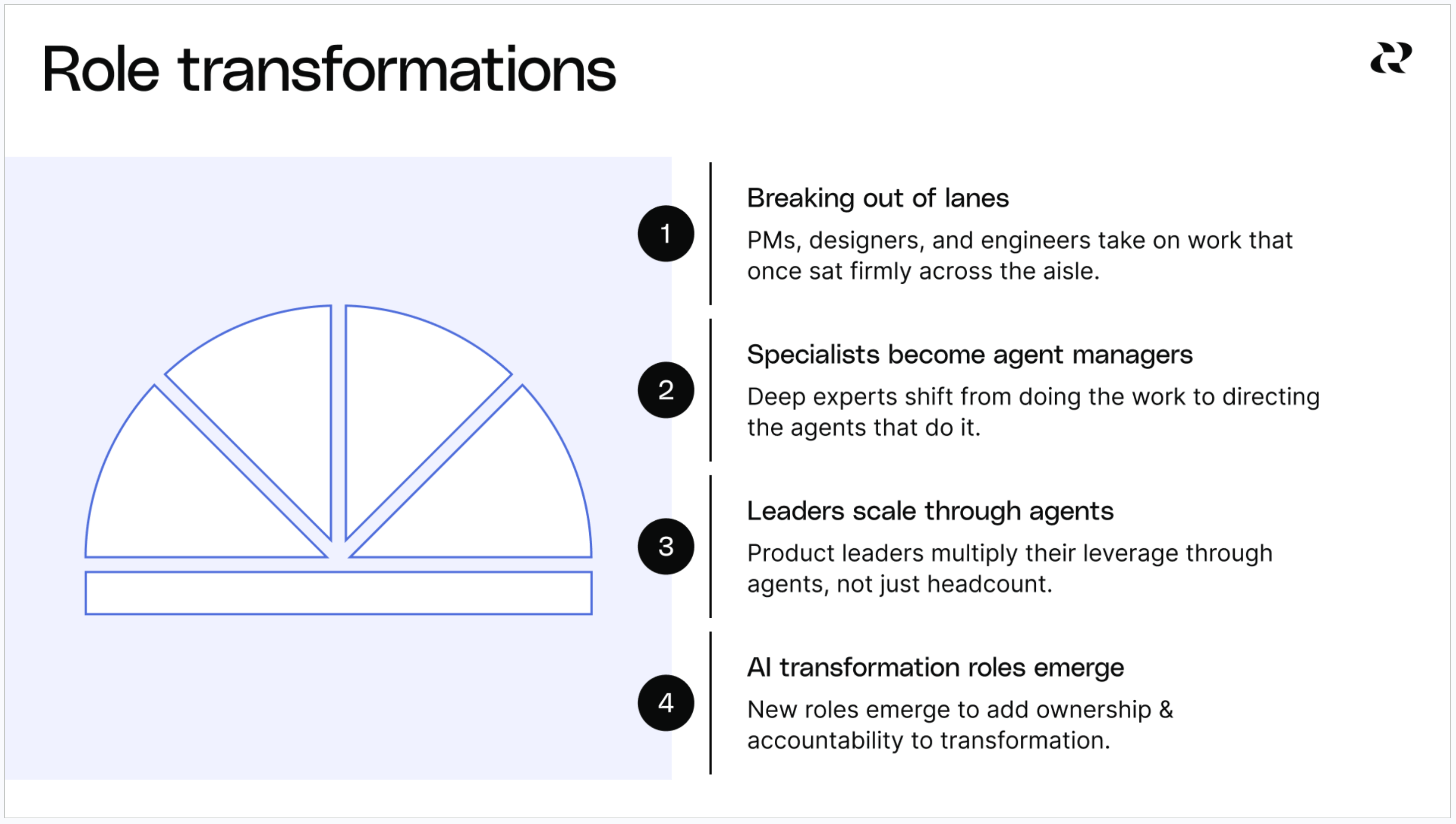
The best teams are transforming roles just as much as process:
PMs, designers, and engineers are breaking out of their lanes and taking on work that once sat firmly across the aisle.
Specialists like data analysts, researchers, and designers are becoming agent managers, shifting from doing the work themselves to directing a fleet of specialized agents that anyone on the team can use.
Product leaders are learning to scale through agents, not just headcount.
New AI transformation roles are emerging to bring real ownership and accountability to the transformation itself.
Together, these process and role transformations lead to far more effective use of human talent in the AI era.
4. Get Everyone on Board
The reality is that AI transformation is equally a human transformation. The average team runs a few trainings and then mandates AI usage. While the best teams apply the psychological principles of behavior change to bring their entire team along and drive lasting adoption.
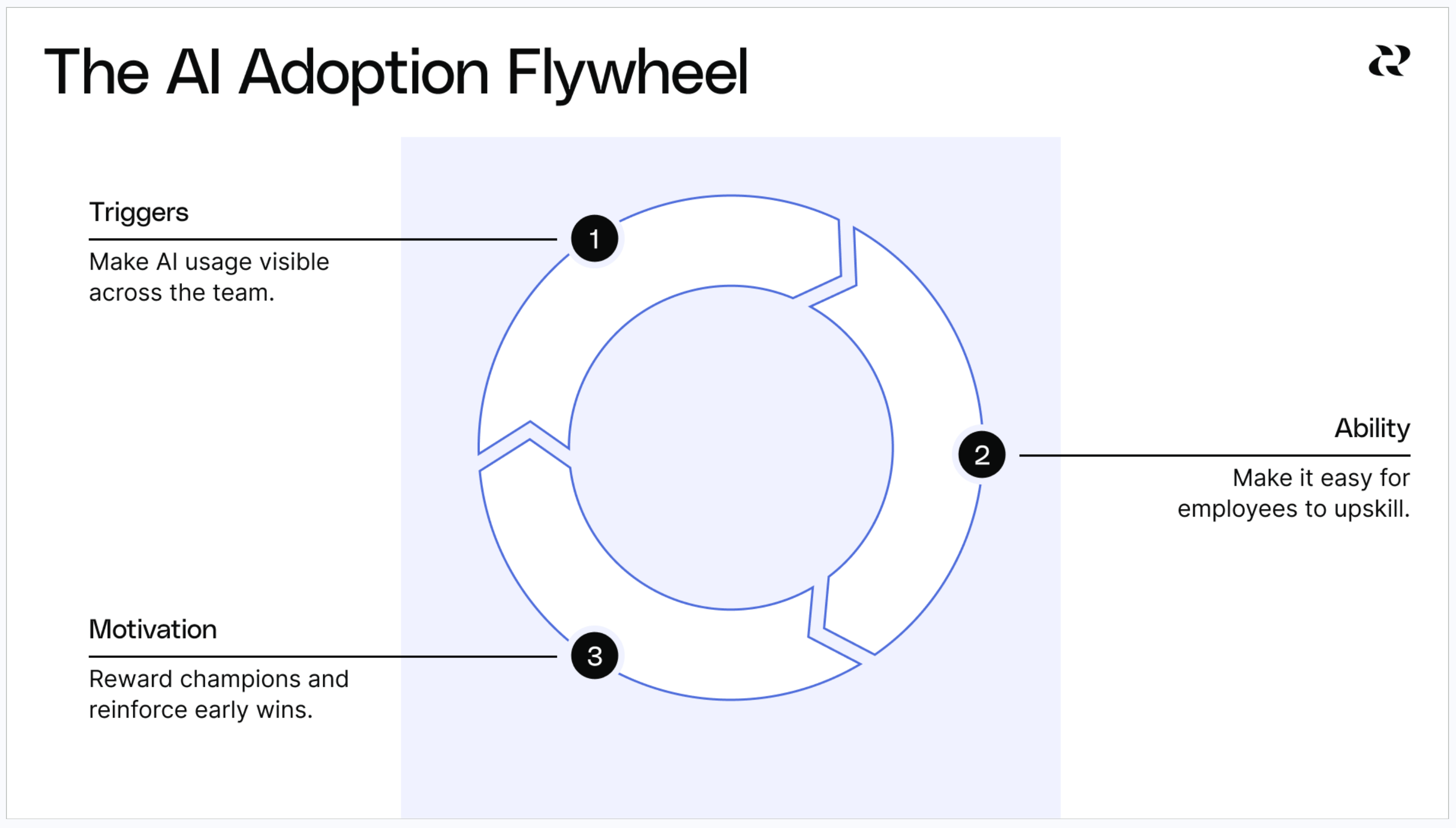
To capture the full toolkit they’re using, I developed the AI Adoption Flywheel, a framework that makes AI adoption a repeatable process. It’s built on the three ingredients of behavior change: triggers, ability, and motivation.
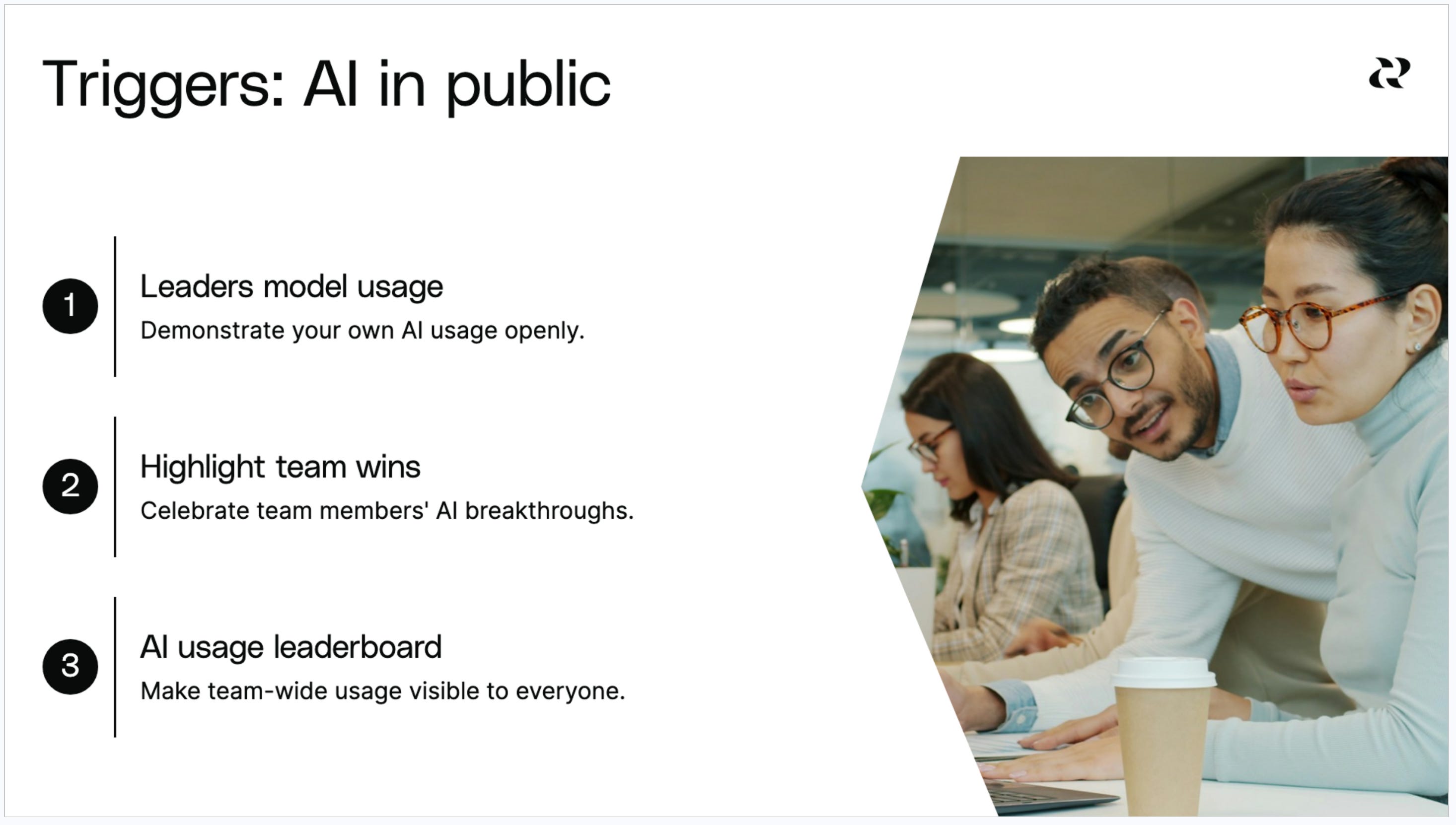
Triggers: AI in public. The best teams make AI usage highly visible, creating constant prompts that spur people into action. Leaders model their own usage openly, team members’ breakthroughs get highlighted, and a team wide usage leaderboard makes adoption visible to everyone. Each of these keeps people regularly confronted with concrete examples of how AI could help in their own role.
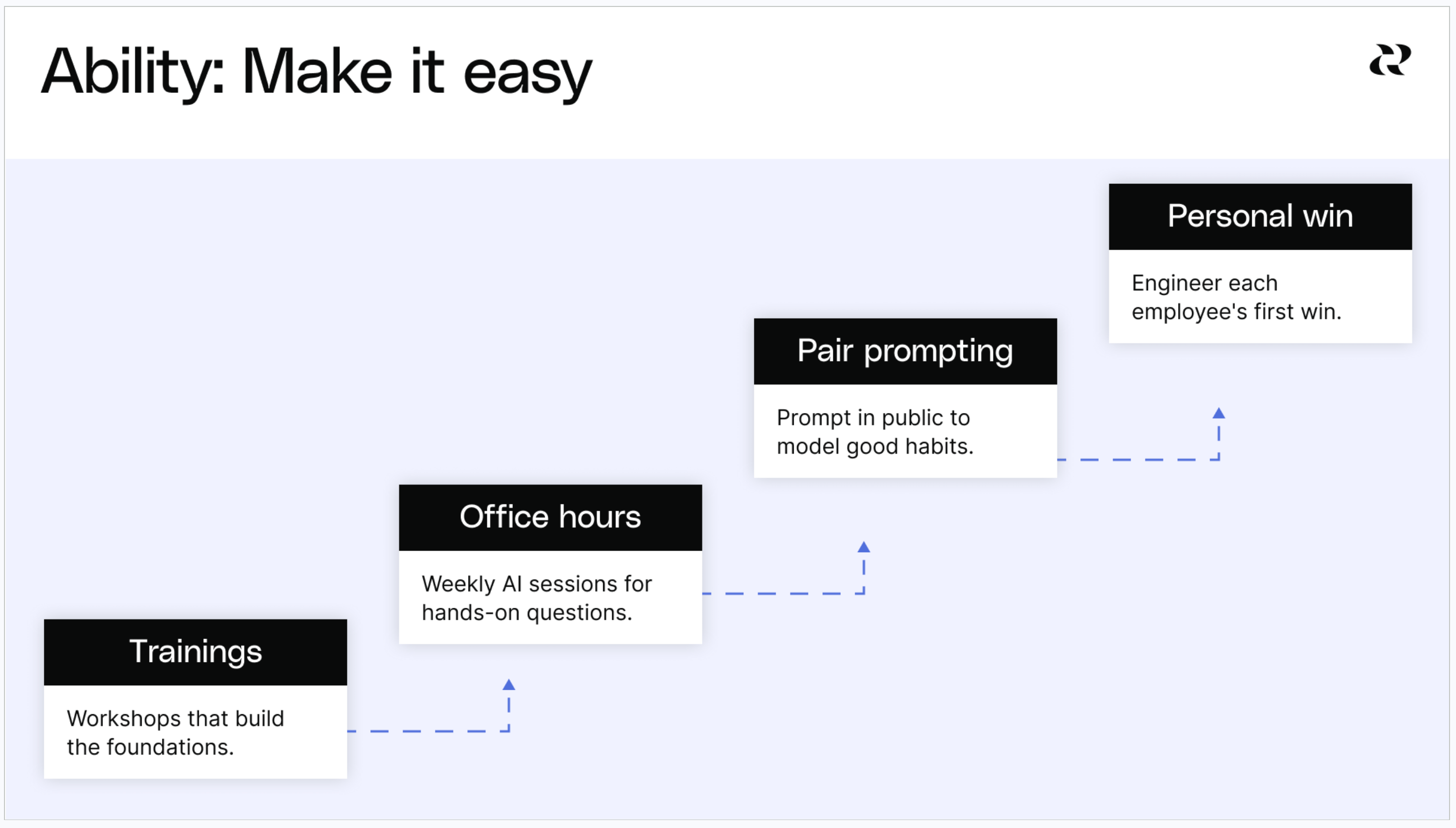
Ability: make it easy. Trainings and workshops build the foundation, but the best teams find opportunities for continuous learning well beyond them, from weekly AI office hours to pair prompting sessions where people prompt in public to model good habits. All of it is designed to engineer each person’s first personal AI win. That win is what gets someone over the critical initial hurdle and turns them into a motivated learner who keeps going on their own.
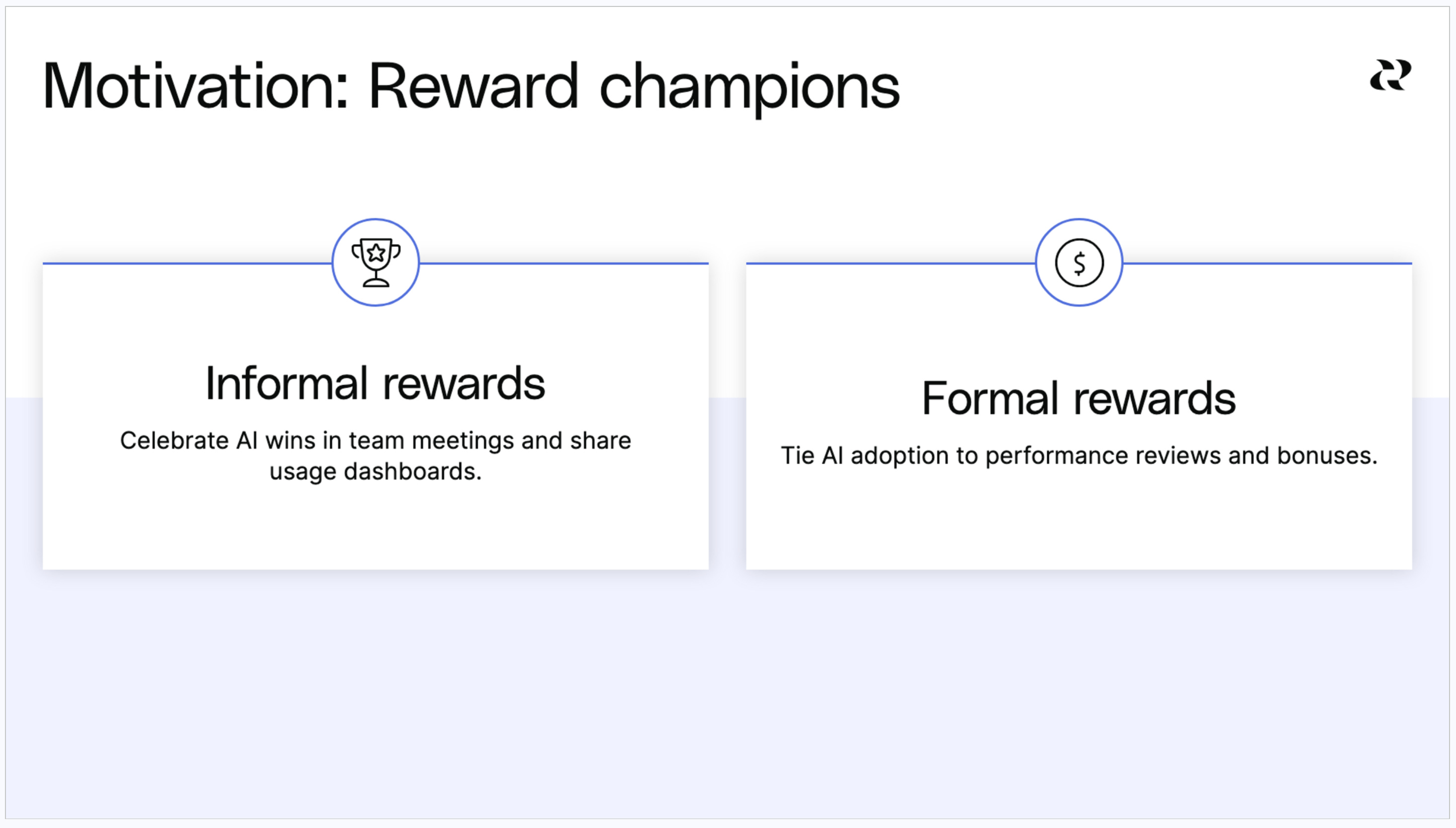
Motivation: reward champions. Finally, the best teams create real motivation to learn and build with AI. Informal rewards like celebrating AI wins in team meetings and sharing usage dashboards recognize champions publicly. Formal rewards tie AI adoption to performance reviews and bonuses.
Together, these three pillars turn one person’s personal win with AI into momentum for the rest of the team, and that momentum is what keeps the flywheel spinning.
I hope this gives you a clear picture of why the gap between the best teams and the rest is widening, and a roadmap for how your team can close it.
If you are a product leader looking to accelerate this transformation on your own team, I’d encourage you to check out my AI Transformation course, starting Oct 28, which teaches this full playbook in detail. I’ll also be bringing in AI transformation leaders at the frontier as guest speakers each week so you can directly learn from their expertise. Learn more.
Whenever you’re ready, here are 4 ways I can help:
AI Transformation: Learn the emerging playbook for transforming your product team into an AI native organization.
AI Productivity: Learn how leading product managers use AI to become faster, smarter, and gain super powers beyond their traditional role.
Mastering Product Management: Accelerate your product career by learning rigorous frameworks for each PM deliverable, from crafting a strategy to prioritizing a roadmap.
Product Innovation Strategy: Building a new product? Learn how to leverage the Deliberate Startup methodology, a modern approach to finding product/market fit.