
How I Use AI as a Product Manager
A practical map to the highest-leverage uses of AI in product management

The role of product management is undoubtedly evolving faster than ever thanks to AI. When I talk to PM’s about this rapid change, though, their reactions have generally fallen into two distinct camps.
For me, and others like me, it feels like the golden age of product: I’m able to accomplish far more than ever, far faster than ever, and without the traditional bottleneck of waiting on cross-functional partners to get things done.
But for others, the rapid change in the role has been overwhelming. With a busy day job, many have found it hard to find the time to learn how to best apply AI to their PM role and where they can get the biggest bang for their buck.
This guide is a practical map for those in the second camp seeking the promised land. I’m going to walk through all the product work PMs are responsible for and showcase where AI is creating the most leverage for me today.
I’m not here to overhype AI though. I’ll share where I’m getting real value that’s worth spending your time on and at the same time, highlight where AI fails to deliver quality output and human effort remains critical.
So let’s dive in…
The post is sponsored by Exponent, the leading PM interview prep platform.
Exponent helps you land your dream product manager role at Open AI, Anthropic, Google, Meta, Amazon, Microsoft, Apple, and other top companies. Learn from mock interviews, frameworks, and advice from senior candidates.
For the next month you can use my discount code (SACHIN20) to get an extra 20% off their annual plan.
The Deliverables of Product Managers
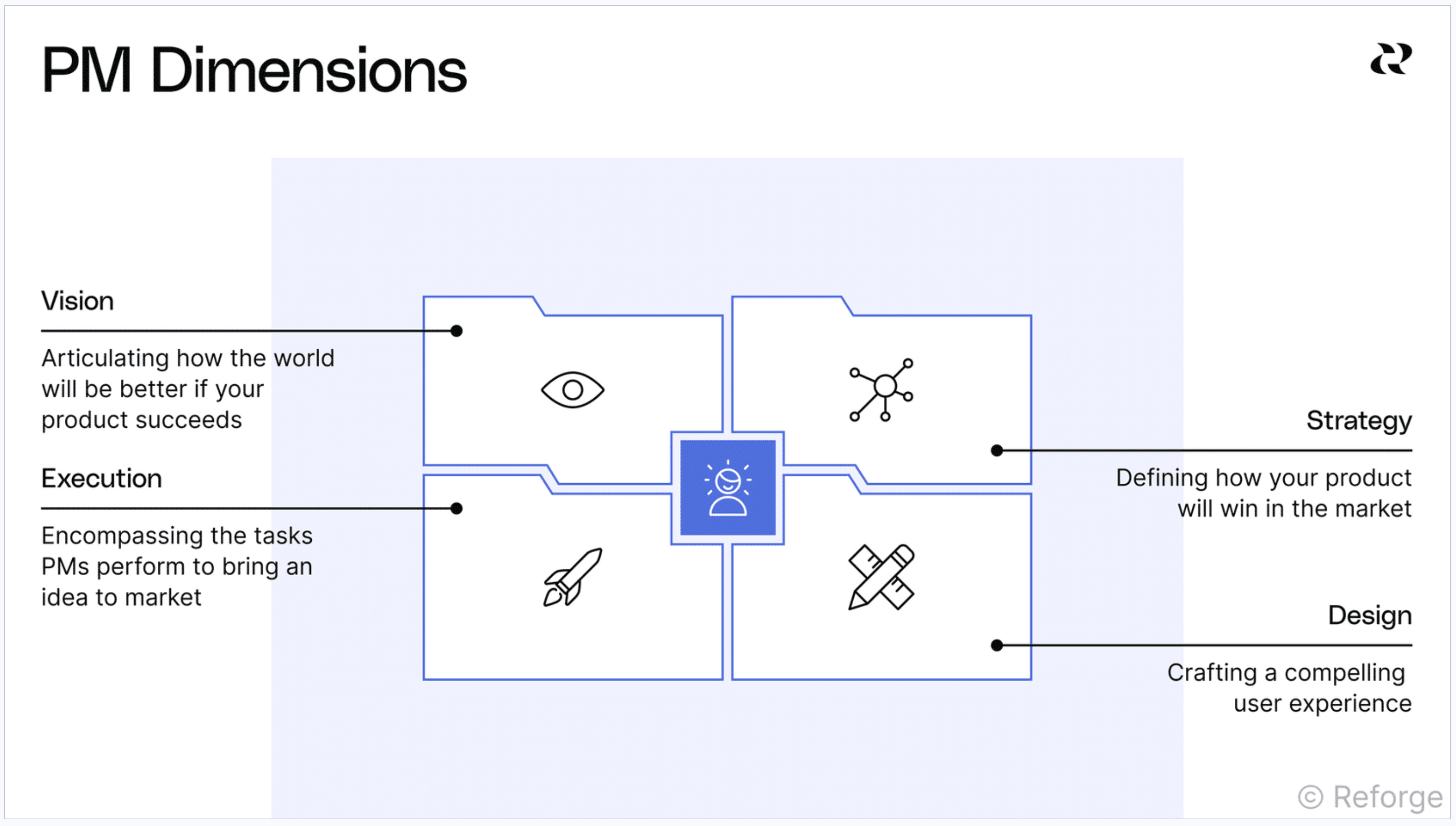
I’ve always defined the role of the product manager as driving the vision, strategy, design, and execution of their product:
Vision is about articulating how the world will be a better place if your product succeeds
Strategy is about defining how your product will win in the market it plays in
Design is all about crafting a useful, usable, and delightful product experience
Execution encompasses all the work necessary to bring your product to market
While this high-level view of the product role is helpful, I find breaking down each dimension further into the individual deliverables product managers are responsible for makes it even more actionable.
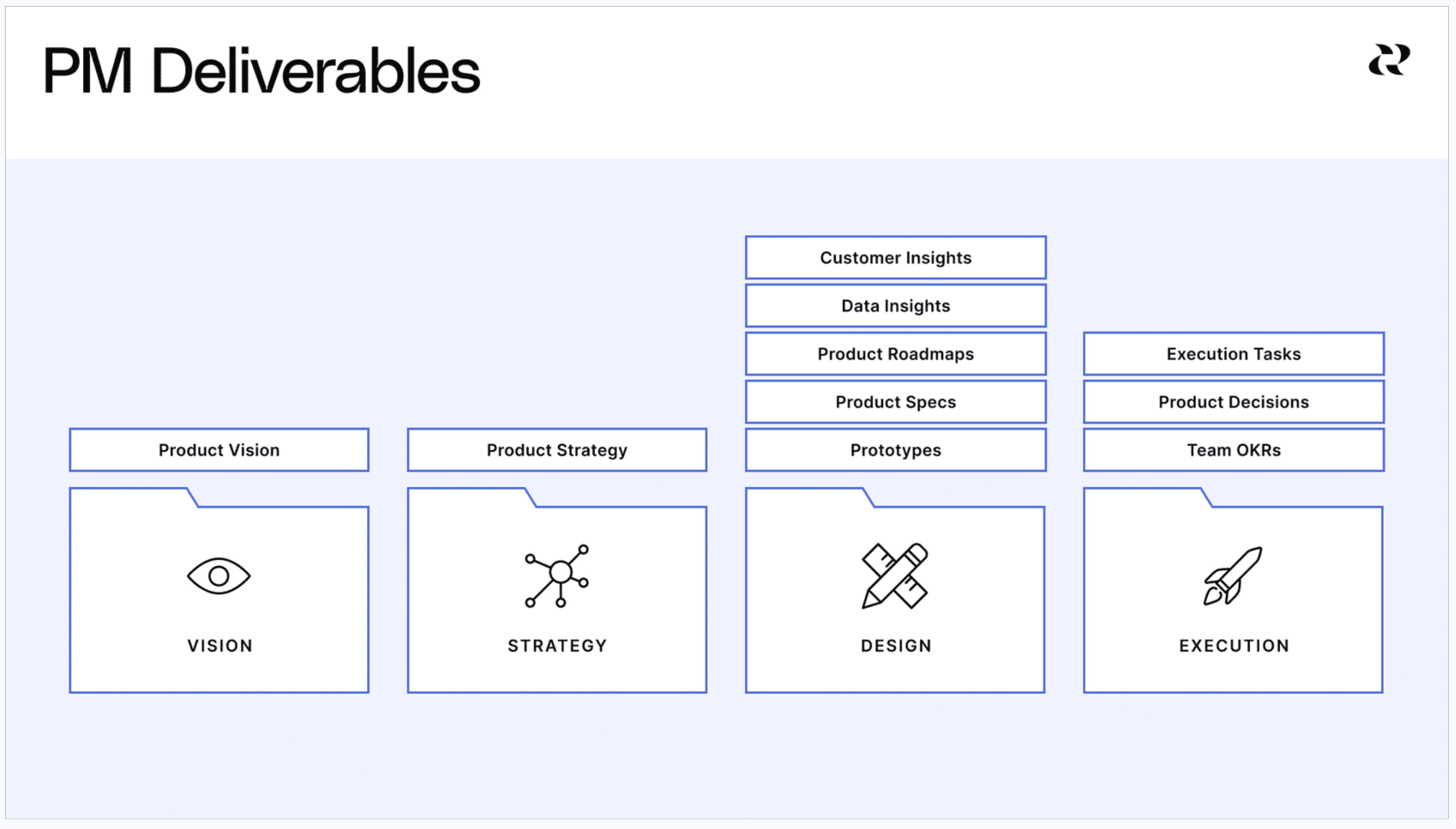
These ten deliverables represent the majority of product work that PMs spend their time on:
Vision
Product vision - A vision narrative that articulates how the world will be a better place if your product succeeds
Strategy
Product strategy - A detailed product strategy map that defines how your product will win in the market it plays in
Design
Customer insights - The results of your customer research: actionable customer insights that inform your product strategy, roadmap, specs, and designs
Data insights - The results of your analytical research: data insights that equally inform your product direction
Product roadmaps - A detailed timeline of features, initiatives, or releases that the team intends to deliver to achieve it’s objectives
Product specs - Detailed requirements that inform the design & engineering of a specific feature set
Prototypes - Interactive designs for a particular feature set
Execution
Execution tasks - A broad bucket for all the tasks required to get a product over the finish line
Product decisions - The many micro and macro decisions that you need to make along the way to build the product
Team OKRs - The monthly, quarterly, or annual goals that you set for the team to drive focus, alignment, and accountability
Now that we have a holistic sense of the product deliverables PMs spend their time on, let’s now go through each in detail to understand where AI can provide you the most leverage today.
Vision
When product managers do their job well, they not only focus on the short-term roadmap, but also paint a broad product vision for where they are ultimately headed. Doing so not only raises the ambition of the team but also helps to guide a multi-year product evolution.
If you want to understand what truly ambitious product visions look like, here are my favorites:
PayPal - Speech to Employees, 1999 - Peter Thiel
Tesla - The Secret Tesla Motors Master Plan, 2006 - Elon Musk
Lyft - The Third Transportation Revolution, 2016 - John Zimmer
Blue Origin - Going to Space to Benefit Earth, 2019 [Video] - Jeff Bezos
6 more exemplary product visions
When ideating a product vision concept, so far I’ve found AI to be minimally helpful. Because the very goal is to articulate a future that does not yet exist, AI often struggles to come up with truly ambitious ideas that actually map to your specific product realm. I’ve either ended up with fairly incremental feature suggestions or pure science fiction that doesn’t map to reality.
Now, where I am getting plenty of leverage out of AI is when I want to bring my vision to life as a visual vision walkthrough. Before I used to have to get dedicated design time from my product designer to put together vision concept mockups that painted the picture as a connected series of mocks of where we were going with our product vision.
Now with AI, I can put together this same vision walkthrough myself as an interactive AI prototype. We’ll talk more about AI prototyping when it comes to design deliverables, but AI prototyping enables me to leverage simple prompts to create a high fidelity fully interactive click-through prototype with gestures, animations, and full functionality showcasing my vision for the future product direction.
I’ve found these vision walkthroughs to be far more compelling and inspiring then written narratives alone and now I’m able to put these together, thanks to AI prototyping, without the need for securing additional resources.
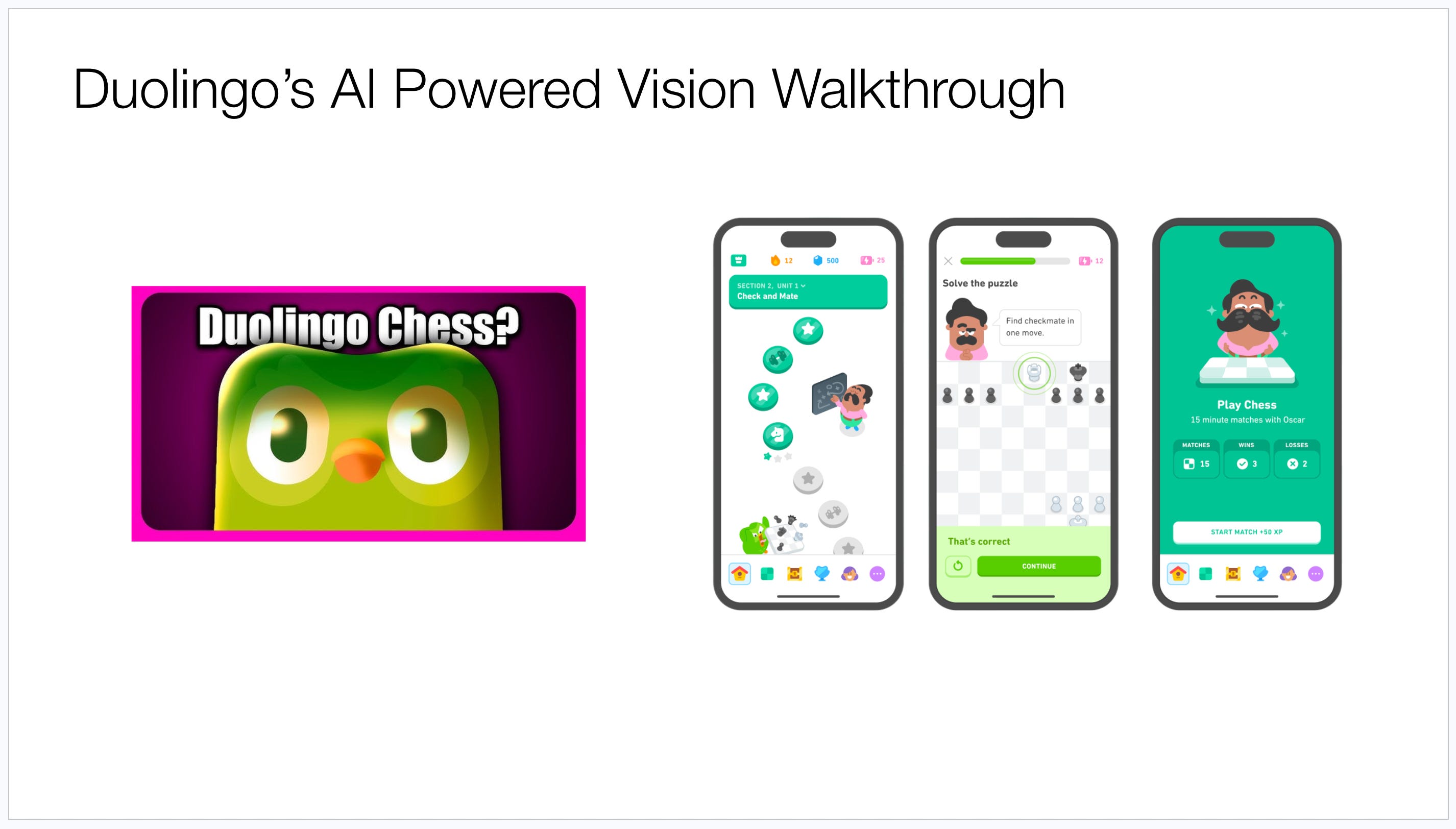
My favorite example of an AI powered vision walkthrough comes from the Duolingo team. Most people know Duolingo as a fantastic language learning app, but what most people probably don’t know is that they also recently launched a chess learning app.
The origin story of this new app is fascinating: An enterprising product manager and designer at Duolingo believed the company should get into chess, but as you can imagine, it was a controversial idea. What does chess have to do with language learning?
Rather than writing a spec or a product strategy document, they built a vision prototype using Cursor. They demonstrated that Duolingo’s core design concepts of puzzles and spaced repetition could be equally applied to learning chess. When the exec team saw the vision prototype, they had the same aha moment: this does look and feels like a Duolingo product and it leverages our unique secret sauce. They also compared it to the top chess learning apps in the App Store and quickly realized this experience felt entirely different.
The executive team quickly greenlit the initiative after experiencing the AI powered vision walkthrough. I believe they would have never achieved that level of executive alignment as quickly without it.
Strategy
Developing a compelling product strategy is critical for a product manager as it puts your product on the path to winning in the market it plays in. Without one, it’s too easy to end up with a feature factory, diligently developing and releasing features yet failing to actually meet your business objectives.
Before we can discuss how we can leverage AI to develop a product strategy, it’s important to have an understanding of what a compelling product strategy actually looks like.
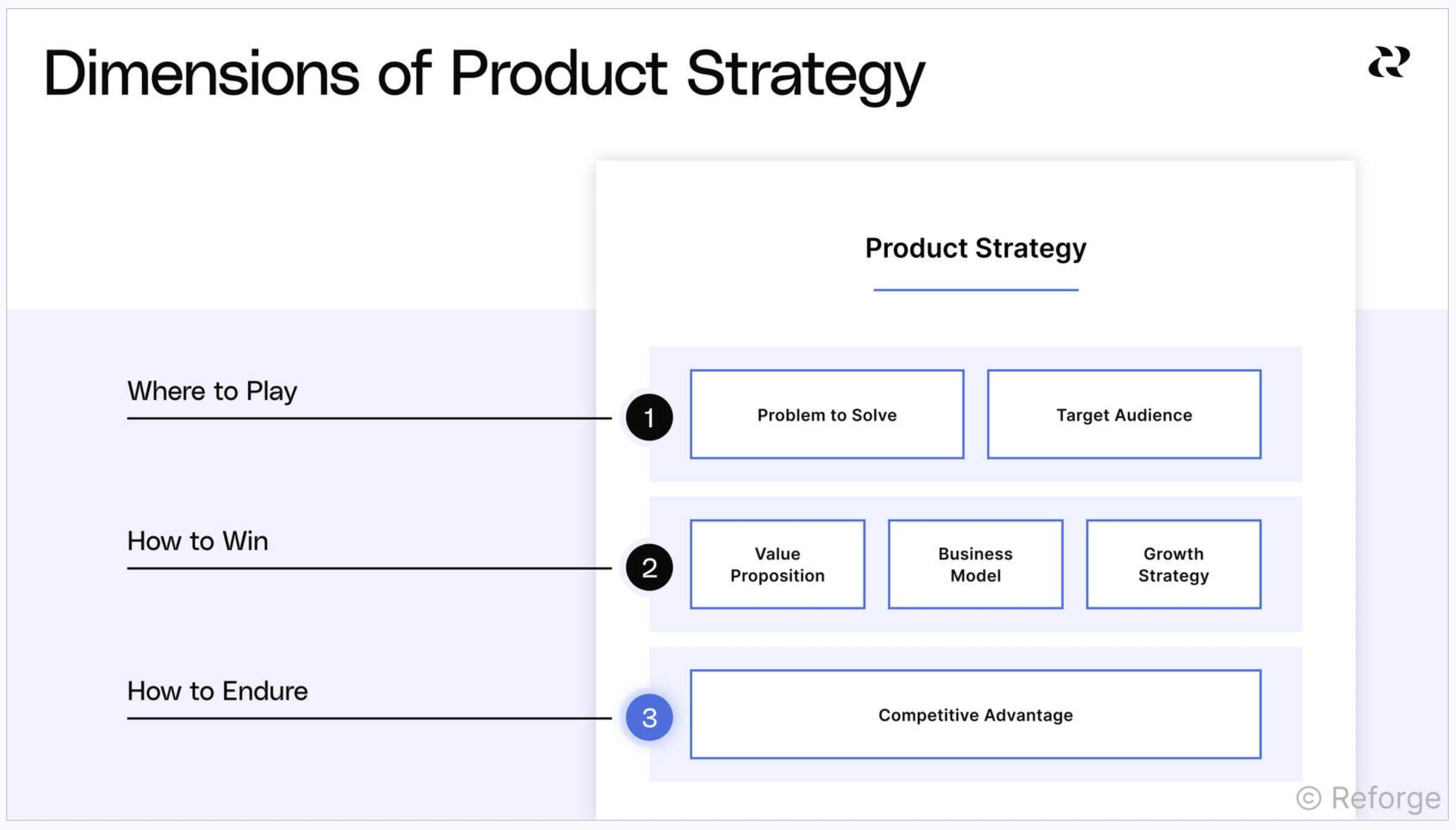
A product strategy answers three critical questions for your product:
Where to play — In what market does your product compete in? This breaks down into:
Problem to solve — What specific problem are you solving?
Target audience — What specific customer segment are you going after?
How to win — How will your product differentiate itself and win in it’s market? There are three core questions to answer when it comes to winning against the competition:
Value proposition — How are you uniquely solving the problem for the customer?
Business model — How are you receiving value for your product (ads, transactions, subscriptions) and what is your specific pricing strategy?
Growth strategy — How will you attract customers to your product?
How to endure — How will you ensure you maintain your edge against competition? This boils down to:
Competitive advantage — What unique moat can you construct to ensure your competitors can’t easily replicate your success?
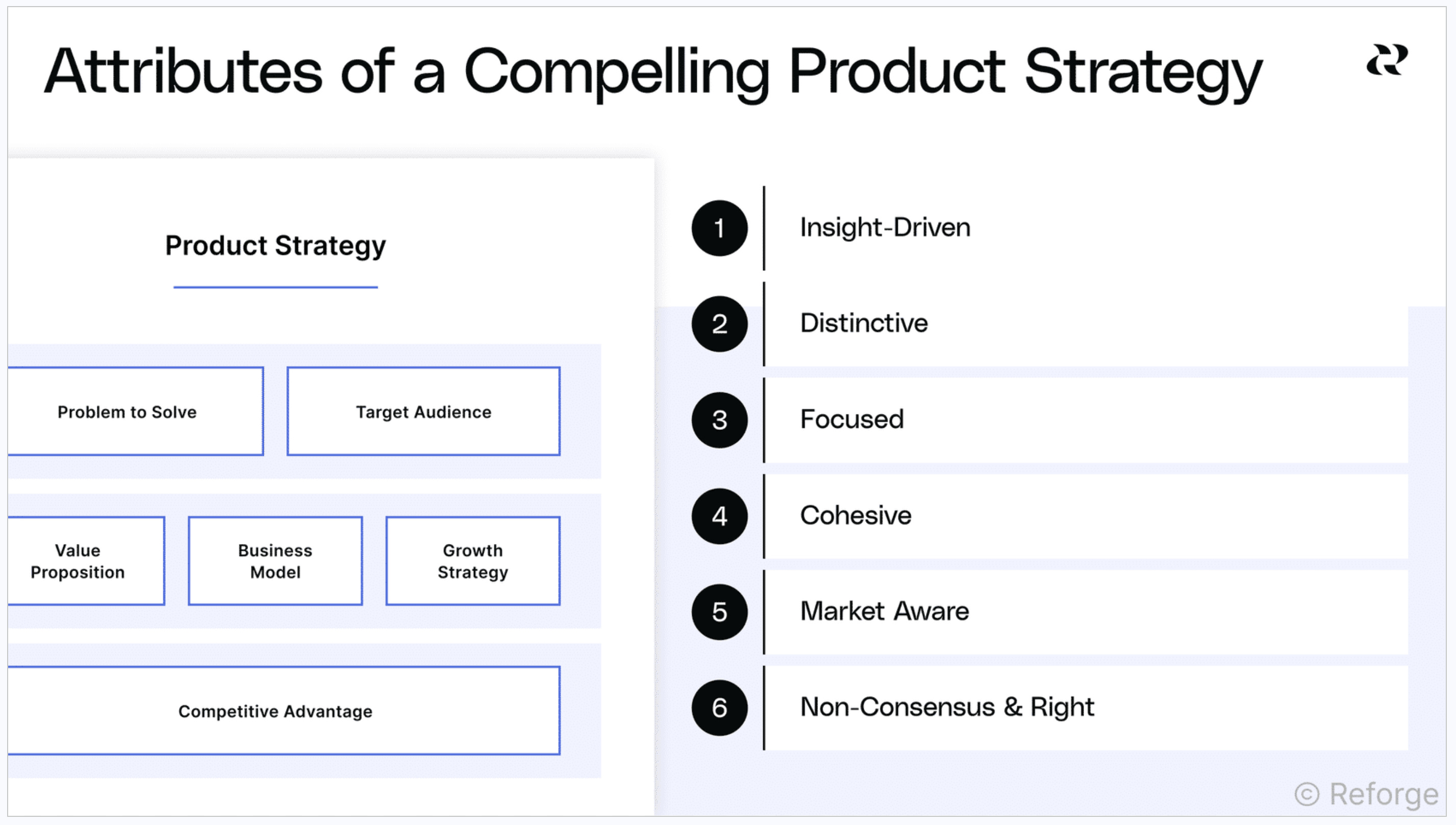
While answering each of these questions is necessary for constructing a product strategy, it’s certainly not sufficient for crafting a compelling strategy.
The most compelling product strategies have the additional attributes of being insight-driven, distinctive, focused, cohesive, market aware, and non-consensus and right.
If you want to go deep on product strategy, check out my essays summarizing the thought leadership of the world’s leading strategists:
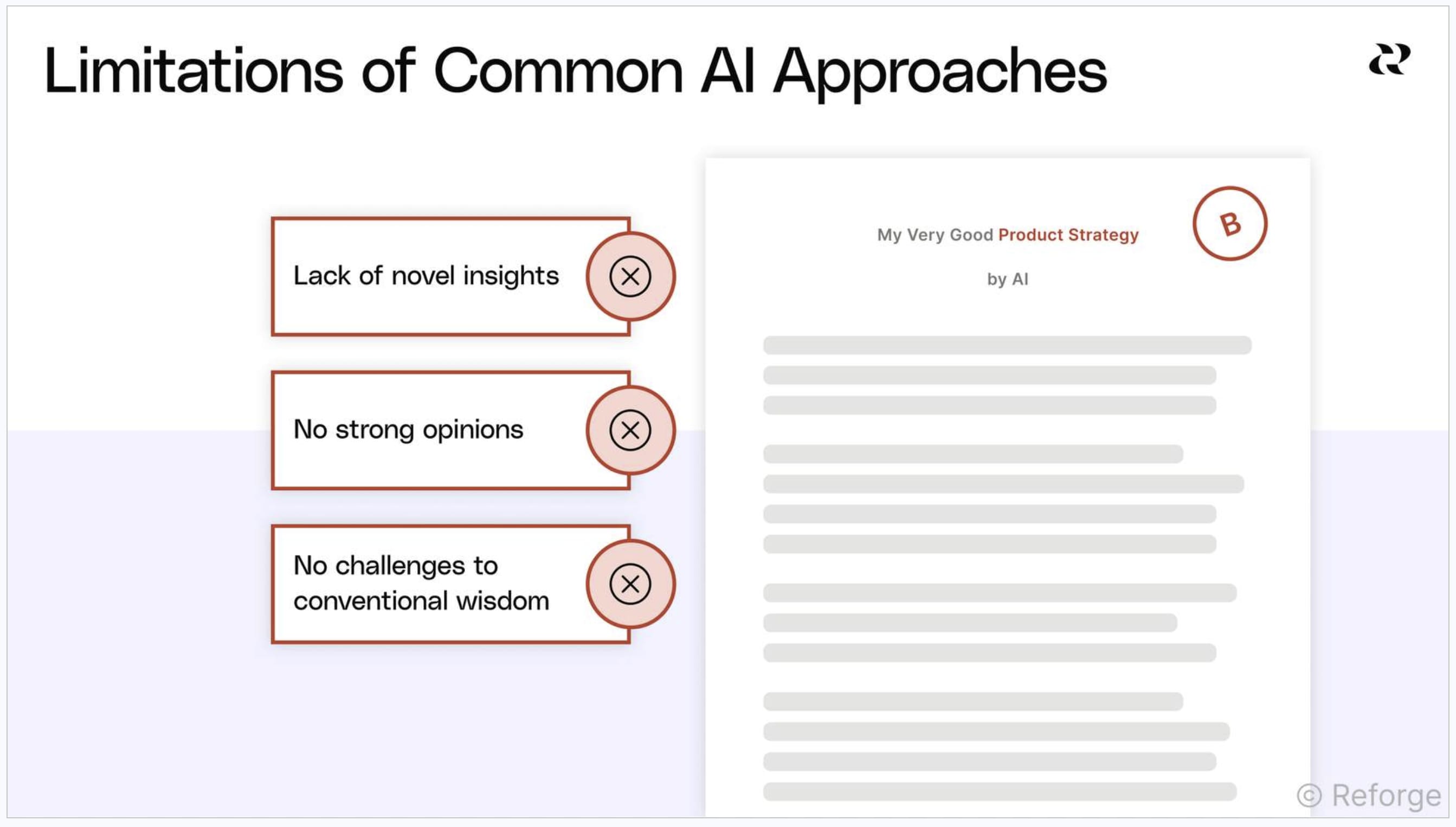
Now let me explain the typical approach that is often leveraged to write a product strategy with AI: you provide an LLM context about your product, give it a product strategy template like the 6 dimensions we just discussed, and then ask it to put together a product strategy.
What you’ll get back is a solid B product strategy. It looks decent because it comprehensively addresses each of the six dimensions of your product strategy template, is well written, and has zero grammatical errors. But it will typically lack any novel insights, offer no strong opinions on what direction to pursue, and fail to challenge conventional wisdom. It basically fails to adhere to each of those additional attributes we just discussed that make a strategy actually compelling. (And believe me, simply telling it to craft a strategy adhering to those attributes doesn’t help either).
Let me illustrate why this actually happens. Let’s take the attribute of non-consensus and right. A great product strategy takes an opinionated bet on a strategic direction that not a lot of other people agree with but also happens to be right. When you do this effectively, you get a significant head start on the market and it allows you to pursue the space initially with limited competition.
Take, for example, Elon Musk and his early focus at Tesla on building a luxury performance electric vehicle. At the time, this was not where the market was headed. Instead all the existing EV manufactures were building cars like the Chevy Bolt and Toyota Prius — low-end EVs focused on saving gas and being economical. Elon’s contrarian bet ultimately paid off as a market did in-fact exist for such a luxury EV and it allowed him to get years ahead of the competition. But such contrarian non-consensus bets are difficult for AI to develop due to their probabilistic nature, which quickly steers you back to consensus solutions.
I hope you can now see why you’re unlikely to be able to leverage AI to one-shot a compelling product strategy.
A SIDEBAR ON TASTE
In our discussion of both product vision and product strategy, you’ll notice I pointed out exactly where AI fails to deliver quality output. I could have only done that if I had a deep sense of what great work actually looks like. That’s taste. And that actually matters more than ever in the age of AI. Read my primer on developing taste.
But that certainly doesn’t mean we can’t leverage AI to help us put together a product strategy. We just have to do so in far more nuanced ways.
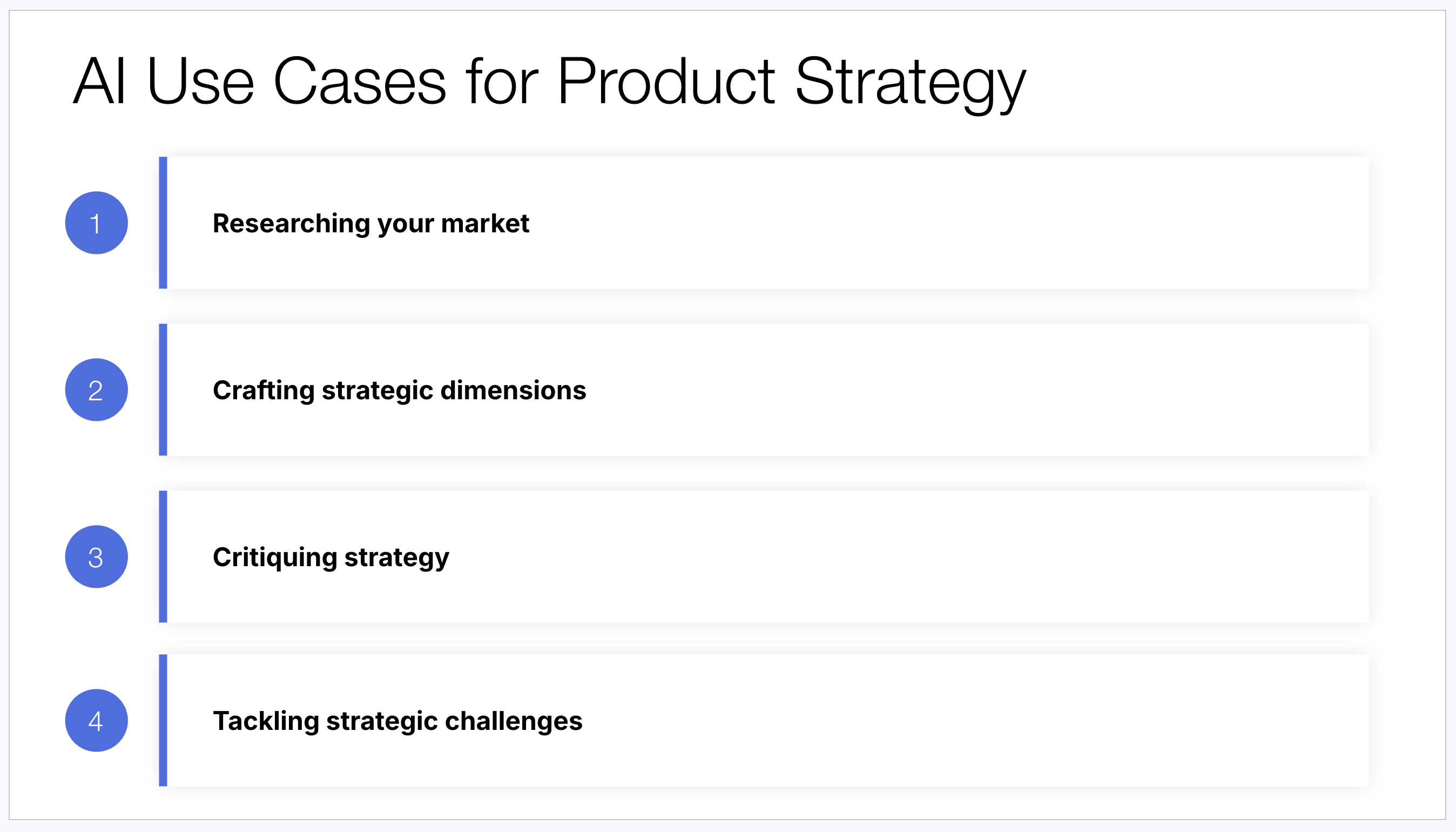
I’ve found four highly effective uses of AI when it comes to crafting a compelling product strategy:
Researching your market
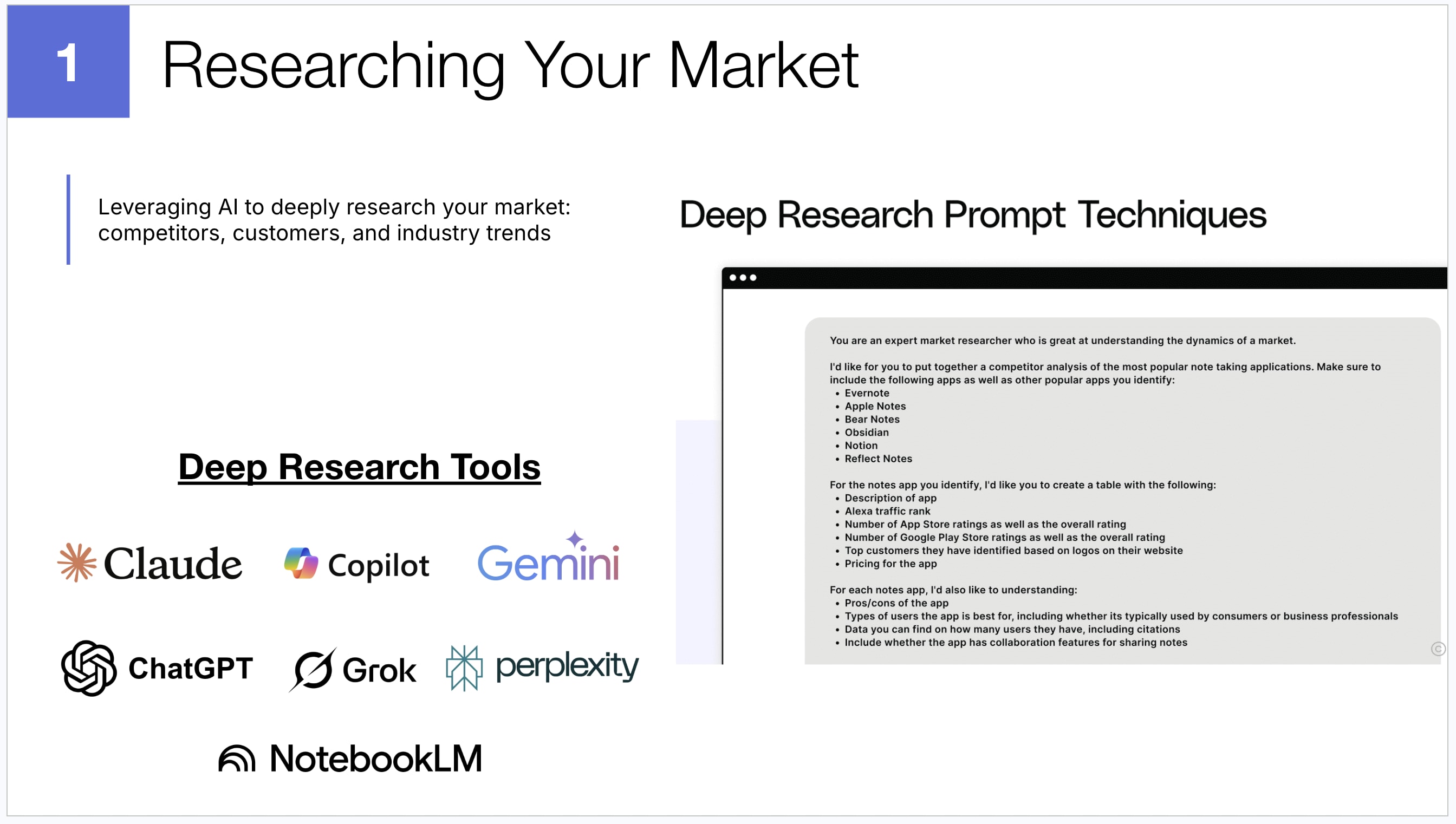
The Deep Research capabilities of AI tools are incredibly effective for helping to research your market, including competitors, customers, and industry trends.
Whenever I’m looking to refresh my product strategy, this is where I start. I’ll put together an extensive deep research prompt, seeding it with key competitors, asking for specific traction signals, and asking for evidence to monitor certain trends. These prompts will typically take 15 - 30 minutes to get a response. I’ll typically simultaneously fire off the same prompt to several different AI tools (say Claude, ChatGPT, and Gemini) and then spend my time reading through the reports. I always come away with insights I didn’t realize, especially on what’s working for particular players in the market.
Crafting strategic dimensions
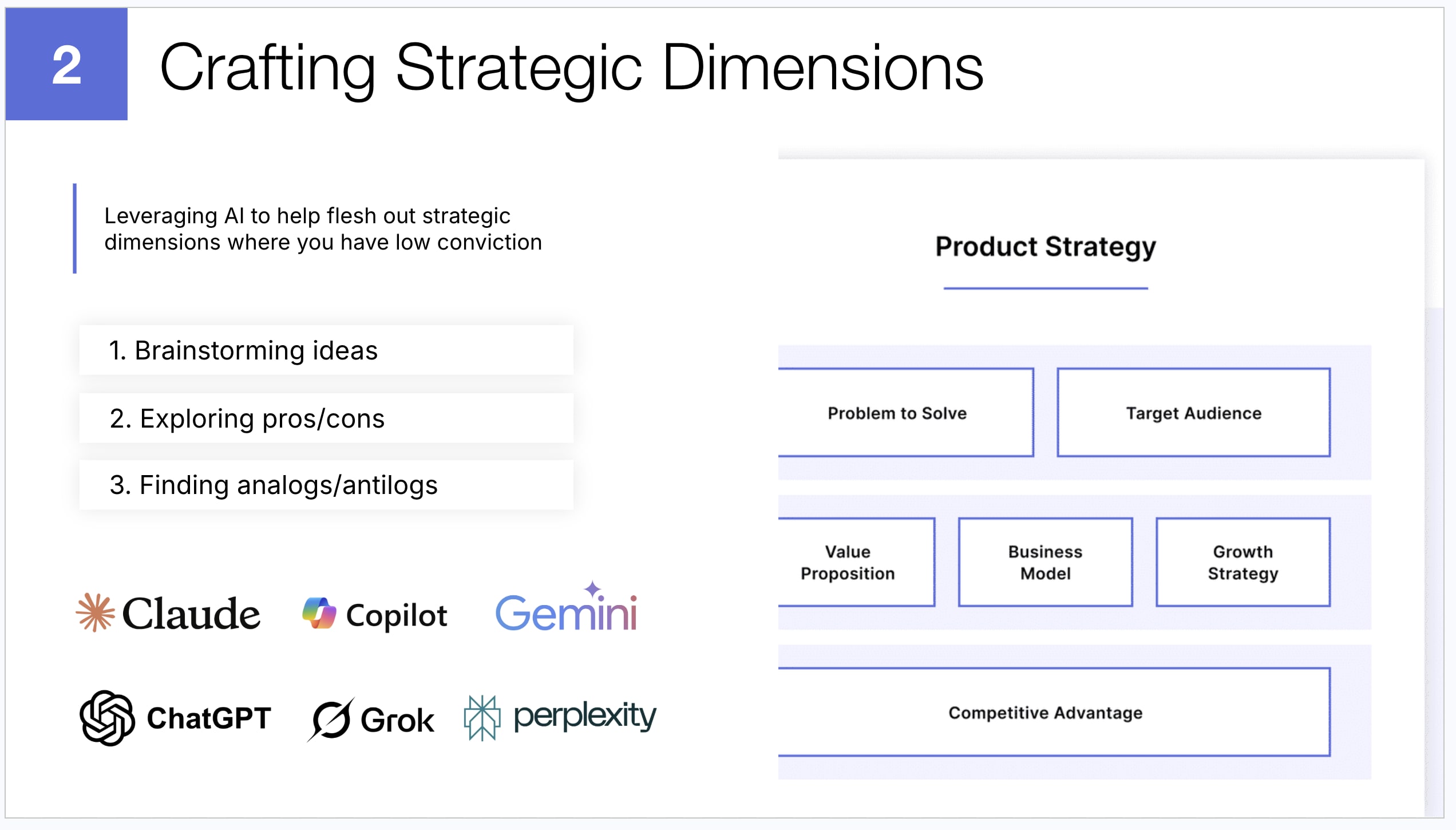
I’ve also found AI to be quite effective at helping me to craft very specific dimensions of my product strategy. But here’s the nuance — I’m not asking it to one shot my entire strategy. Instead I’m providing context on the dimensions I already have deep insights and strong conviction on. And then leveraging AI to help me explore options for a particular dimension I have low conviction on.
For example, let’s say I’ve got a solid problem to solve and target audience, but I’m not quite sure what growth strategy would be most effective to reach my target segment. In that case, I’ll give AI the rich context on the dimensions I already have and begin a brainstorming and exploration exercise for the growth strategy. I’ll have it brainstorm ideas and provide pros and cons for each. What I find particularly helpful is asking it to come up with analogs (examples of others successfully employing the strategy) as well as antilogs (examples of where the strategy failed for others). By doing so, I can build much stronger conviction on whether that strategic approach would work for us.
Critiquing strategy
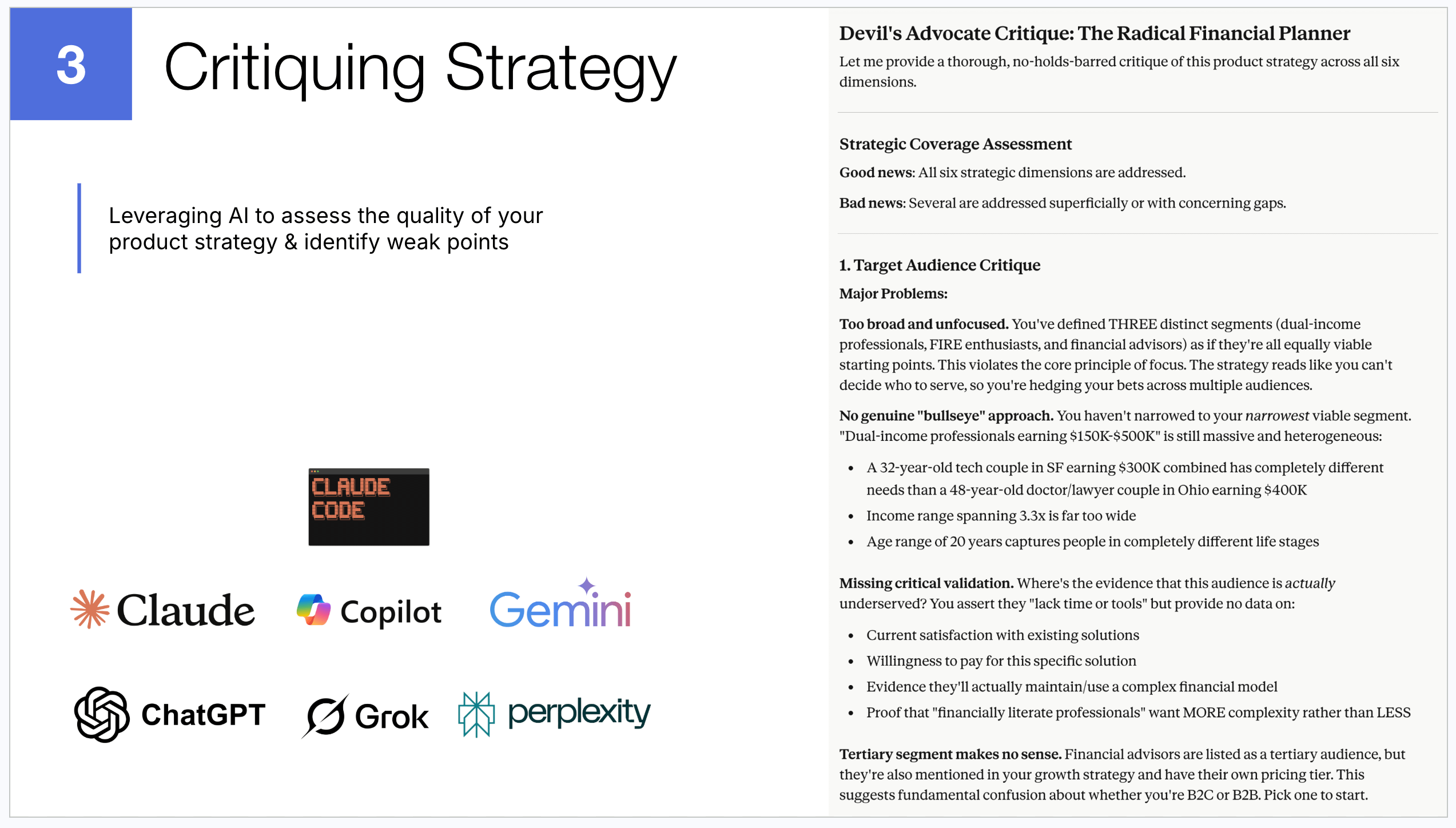
While AI isn’t particularly good at drafting an entire strategy, it’s surprisingly good at critiquing a strategy once written.
I’ve done this in multiple different ways. First, I built a CustomGPT, called Product Strategy Critique, that takes your product strategy and provides a detailed critique. Feel free to give it a try on your own product strategy. I’ve created the same thing as a project in Claude as well as a custom /critique-product-strategy skill in Claude Code.
Each approach takes all the best practices on product strategy from my Mastering Product Management course and specifically applies them directly to your product strategy document. You’ll get a detailed critique on each of the strategy dimensions which you’ll find to be quite actionable.
I honestly wish I had this when I was at LinkedIn, as it would have significantly up-leveled all my PM’s strategies before meeting with me and the rest of the exec team.
If I was still at LinkedIn, here is how I would have made it even better: I would have recorded and transcribed all the executive product review meetings we had using a tool like Granola, then extracted via AI all the key strategic questions asked as well as strategy best practices shared by the leadership team, and then added that to my custom GPT as additional best practices to improve the critique. In this way, I could have incorporated the specific strategic wisdom of the executive team. I’d encourage you to do this too for your own team!
Tackling strategic challenges
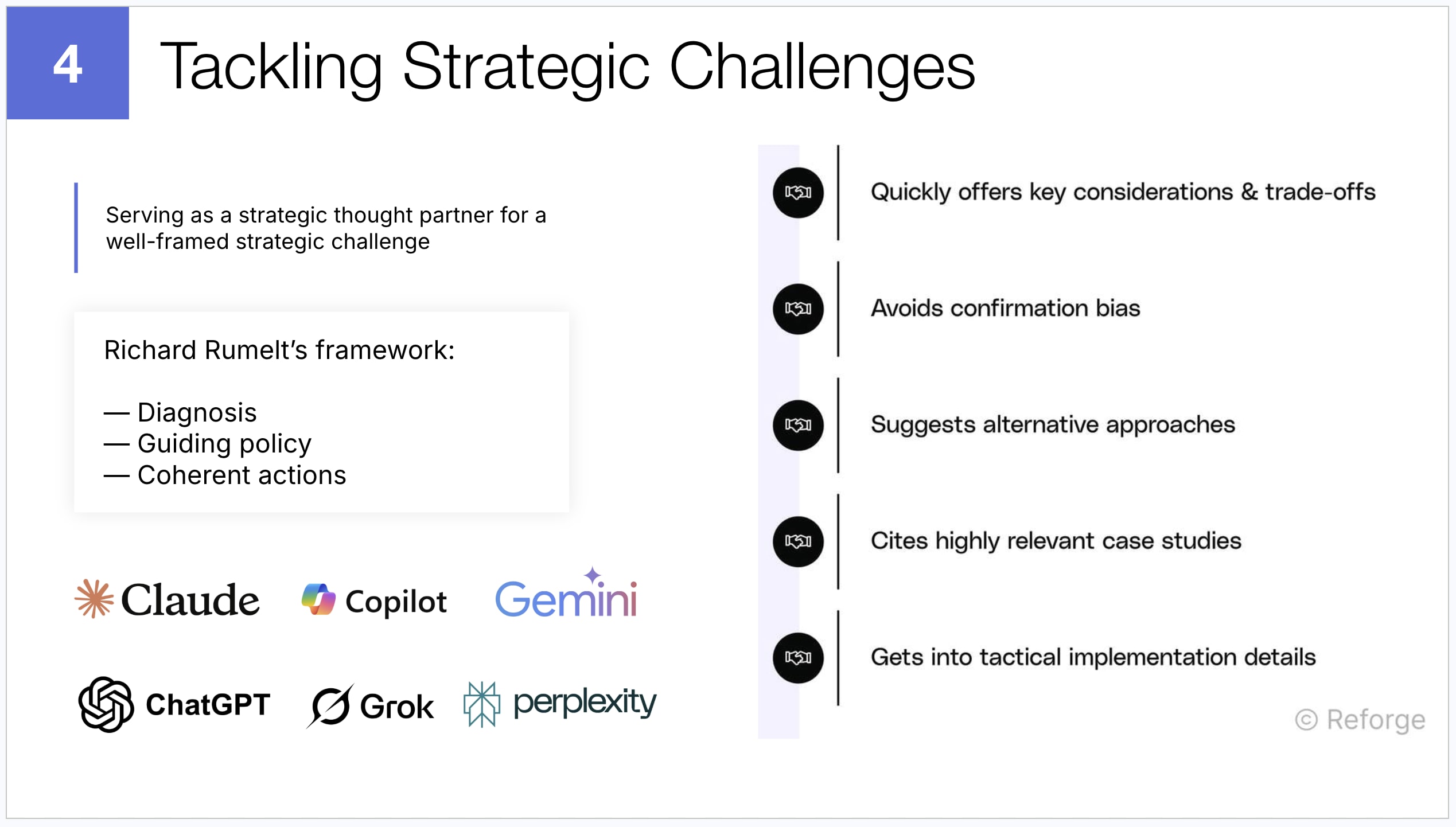
The final way I use AI for strategy is as a thought partner when tackling specific strategic challenges. Ultimately every product comes to a point where it faces a strategic challenge, whether it’s related to competition, loss of product/market fit, reduced growth rate, or a myriad of other challenges.
I’ve found AI to be an extremely helpful thought partner when diagnosing, brainstorming, and weighing options to address such challenges. For example, at Notejoy, we recently realized we were having a pricing challenge. Over the last 5 years all of our competitors had significantly increased their pricing, along with many others in the SaaS space. We hadn’t touched our pricing at all and suddenly found ourselves to be one of the cheapest offerings on the market. The question was, should we also increase our prices since we were leaving so much money on the table? Or had our current low prices become a valuable differentiator for us relative to the competition?
I presented AI with this challenge, gave it the appropriate context, and asked it to help brainstorm potential pricing directions. Not only did it make strong recommendations, but ultimately gave me a detailed plan on how to even A/B test the price change.
Are you interested in step-by-step training on how to develop each one of these AI powered deliverables? Then my AI Productivity course is for you. I go through each PM deliverable and share detailed demos of what AI tool to leverage and how to leverage it most effectively to develop that deliverable. Join 2,5000 product managers who have already become AI native. Learn more.
Design
When it comes to design, product managers are responsible for delivering customer insights, data insights, roadmaps, specs, and increasingly, prototypes. Let’s talk about the impact AI is having on each of them.
Keep reading with a 7-day free trial
Subscribe to Sachin Rekhi to keep reading this post and get 7 days of free access to the full post archives.